Ask ten Melburnians where to go for a big night out and you will get ten different answers, most of them delivered with the confidence of a barrister. That is the thing about this city. Everyone thinks they have the inside line on the best table in town, and half the time they are right, because there are genuinely that many good rooms.
But fine dining here is also quietly confusing if you do not eat out at the top end often. The pricing is opaque. Some of the most celebrated kitchens are in suburban shopfronts with no signage. Bookings for a few of them open on a schedule that feels like trying to get concert tickets. And the phrase itself has drifted so far from white tablecloths and hushed service that you can spend four hundred dollars a head in a room where the staff are in sneakers and the playlist is loud.
This guide is written for people who want to book somewhere excellent without wasting money or turning up underdressed. It covers what the formats actually are, what they cost, how early to book, and how to match a restaurant to the occasion you are actually celebrating. Melbourne has earned its reputation as the country’s eating capital, and the good news is that the top end is more accessible than the reputation suggests, provided you know where the doors are.
What Fine Dining Actually Means in Melbourne Now
The old definition was easy. Linen, a sommelier, a menu with no prices on the guest copy, a maitre d’ who remembered your father. Some of that still exists, and there is real pleasure in it. But the centre of gravity has moved.
Today the city’s most ambitious cooking happens across four broad formats, and they behave very differently. A degustation at a flagship restaurant is a three to four hour commitment with a fixed sequence of courses and very little choice. A grand a la carte dining room lets you order what you like and leave in ninety minutes if you want. A chef’s counter puts fifteen or twenty seats around an open kitchen and turns the cooking itself into the entertainment. And the regional destination restaurants, the ones an hour out of town, trade formality for produce grown within sight of the dining room.
None of these is better than the others. They suit different nights. The mistake most people make is booking a four hour tasting menu for a first date, or taking visiting parents to a loud counter where conversation is impossible.
The four formats compared
| Format | What it feels like | Time at table | Best for |
| Flagship degustation | Set sequence of small courses, heavily staged, no menu choice | 3 to 4 hours | Milestone birthdays, anniversaries, once-a-year blowouts |
| Grand dining room | Full a la carte, deep wine list, polished but flexible service | 2 to 2.5 hours | Business dinners, parents, groups with different appetites |
| Chef’s counter | Open kitchen, 12 to 25 seats, dishes handed over directly | 2 to 3 hours | Food-obsessed friends, solo dining, second or third dates |
| Regional destination | Produce-led, often with a farm or vineyard attached, long lunch energy | 2.5 to 4 hours | Weekend escapes, out-of-town guests, wine drinkers |
Table 1: The four fine dining formats you will encounter in and around Melbourne.
What It Actually Costs
This is where most guides go quiet, and it is the first thing anyone actually wants to know. The honest answer is that the spread is enormous, and the headline menu price is rarely what lands on the card.
A set lunch at a serious restaurant can be extraordinary value, often less than half the evening spend for cooking out of the same kitchen. At the other end, a flagship tasting menu with the matched wines, a cocktail beforehand and service on top can quietly push past five hundred dollars per person. Neither number is wrong. They are just different nights out.
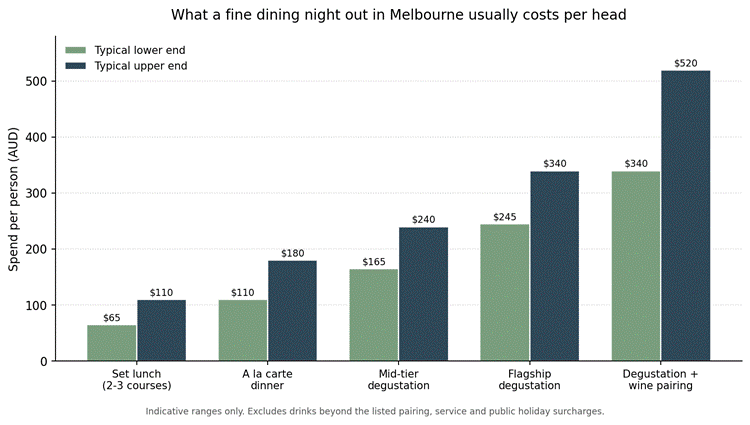
Graph 1: Indicative per-person spend across the common fine dining formats. Ranges are guides, not quotes.
Things that quietly inflate the bill:
- Public holiday and Sunday surcharges, usually ten to fifteen per cent, which are legal and disclosed but easy to miss on the menu footer.
- Supplements inside a tasting menu. Truffle, caviar, a premium cut of beef. These are often listed in small type and added per person.
- Wine pairings that are priced per flight rather than per glass, so a couple ordering two pairings can double the drinks line in one decision.
- Card surcharges. Common, small, and worth knowing about before you split the bill six ways.
- Deposits that are non-refundable inside a certain window. At the busiest rooms this is standard practice now.
Where to Eat: A Shortlist by Occasion
Rather than ranking restaurants against each other, which is a fool’s errand when they are doing completely different things, here is how the well-known rooms map onto the reasons people actually book them. Treat this as a starting shortlist, then check current menus directly, because kitchens change and so do prices.
| Occasion | Style that suits it | Where to look | Book ahead by |
| Milestone birthday | Flagship degustation, full theatre | CBD towers and the inner east | 2 to 4 months |
| Anniversary or proposal | Grand dining room with booths and lower volume | CBD heritage buildings, Collins Street end | 4 to 8 weeks |
| Impressing a client | Polished a la carte, strong wine list, quiet acoustics | CBD and Southbank | 2 to 3 weeks |
| Food-nerd night out | Chef’s counter, omakase, small-format tasting | Fitzroy, Collingwood, Carlton | 3 to 8 weeks |
| Long weekend lunch | Regional produce restaurant with a cellar door nearby | Yarra Valley, Mornington Peninsula | 3 to 6 weeks |
| Interstate guests | Recognisable landmark room with a view | Southbank, CBD rooftops | 2 to 6 weeks |
| Value trial run | Set lunch at a restaurant you cannot justify at dinner | Anywhere, midweek | 1 to 2 weeks |
Table 2: Matching the room to the reason. The booking window is the single most underestimated variable.
A note on the suburbs
Do not assume the best cooking sits inside the city grid. Some of the most interesting kitchens in the state are in converted terraces in Fitzroy, in shopfronts along the northern tram lines, or a full hour’s drive away in the hills. If you are heading out towards the Yarra Valley for a long lunch, it is worth building the day out properly rather than driving two hours for one meal. Our guide to Healesville and the edge of the Yarra Valley covers what else is worth stopping for on the way.
Closer in, the riverside venues offer a different kind of occasion entirely. They are not degustation territory, but for a daytime celebration with a view, somewhere like Studley Park Boathouse does a job that no CBD dining room can.
How to Actually Get a Table
The booking game has changed more than the food has. A decade ago you rang up. Now most of the top rooms run on online systems with release schedules, waitlists and deposits, and the difference between eating somewhere and not eating somewhere is usually just knowing when the calendar opens.
| Tactic | Why it works | Effort |
| Join the mailing list | Most restaurants release seats to subscribers hours before the public link goes live | Low |
| Set a calendar reminder for release day | Bookings often open on the first of the month for a month ahead, at a fixed hour | Low |
| Ask for a Tuesday or Wednesday | Midweek availability is far deeper and the kitchen is often less stretched | Low |
| Book lunch instead of dinner | Same kitchen, lower price, easier table, and you get your evening back | Low |
| Take the early or late sitting | The 5.45pm and 8.45pm slots move last and are frequently still open | Low |
| Join the waitlist and mean it | Cancellations are constant, especially 48 hours out. Reply fast and you will eat | Medium |
| Sit at the bar | Many fine dining rooms serve the full menu at the bar with no reservation | Medium |
Table 3: Seven ways to get into a restaurant that says it is fully booked.
One more piece of etiquette that matters more than people realise. If your plans change, cancel properly. Small kitchens run on tight margins and a no-show table on a Saturday is a real loss. Restaurants remember, and so do their booking systems.
Dress Codes, Without the Anxiety
Melbourne is not a formal city, and the fine dining scene reflects that. Almost nowhere enforces a jacket requirement any more. What venues do care about is that you have made some effort, and a handful still draw a line at activewear, thongs and gym gear.
| Venue type | What to wear | What will get a look |
| Flagship degustation | Smart casual at minimum. A jacket or a good dress never feels out of place | Shorts, sportswear, caps |
| Grand heritage dining room | The dressiest end of the city. Lean into it | Trainers with jeans, untucked casual shirts |
| Chef’s counter | Relaxed. Good denim and a decent shirt is the uniform | Almost nothing, but avoid heavy fragrance |
| Regional long lunch | Smart casual with sensible shoes for gravel and vineyards | Heels on a working farm |
Table 4: A rough dress code guide. When in doubt, ring the restaurant and ask. They would much rather tell you.
One practical tip that comes up constantly: heavy perfume or aftershave at a tasting counter is genuinely disruptive. At a twenty-seat room built around delicate aromas, it affects everyone’s meal. The staff will not say anything. Your neighbours will notice.
Dietary Requirements, Allergies and Preferences
Melbourne kitchens are, on the whole, excellent at this. Vegetarian tasting menus are standard rather than an afterthought at most serious restaurants, and many run full vegan and gluten-free sequences. What they need is notice.
- Declare requirements at the time of booking, not on arrival. A fixed menu is ordered and prepped days in advance.
- Be precise about the difference between an allergy, an intolerance and a dislike. Kitchens treat these very differently, and they should.
- If you have a severe allergy, ring and speak to someone rather than relying on the notes box in an online form.
- Expect that a heavily modified tasting menu may cost the same as the original. The labour does not decrease.
Drinks: Pairings, Lists and the Non-Alcoholic Question
The wine pairing is the default upsell, and whether it is worth it depends entirely on how you drink. If you like being led through a list you would never assemble yourself, it is money well spent, particularly in a state with the depth of the Victorian regions behind it. If you would rather share one good bottle over three hours, ask for the by-the-bottle list and let the sommelier steer you. Good sommeliers love this brief far more than people assume.
Non-alcoholic pairings have gone from embarrassing to genuinely interesting. Fermented teas, clarified juices, verjuice and house sodas built with the same seasonality as the food. They are often priced at half the wine flight and, at the better restaurants, are no longer a consolation prize. If you are driving home from a regional lunch, this is the move.
And if the plan is a serious drinks night rather than a serious food night, the city’s bar culture is a whole separate rabbit hole. So is the non-alcoholic scene more broadly, from specialty coffee through to the bubble tea shops that have taken over entire city blocks.
The Lunch Hack Nobody Talks About Enough
If there is one piece of advice in this guide worth acting on, it is this. Book lunch.
A set lunch at a restaurant with serious ambition is usually cooked by the same brigade, in the same kitchen, with the same produce, at somewhere between forty and sixty per cent of the evening price. The dining room is lighter, the service is often warmer because the room is calmer, and the tables are dramatically easier to get. You can try three restaurants at lunch for the price of one dinner, which is a much better way to work out what you actually like.
The trade-off is that lunch menus are shorter and the theatrical end of the experience is dialled back. For a first visit, that is a feature rather than a bug.
Mistakes People Make
- Booking the fanciest room rather than the right room. A four hour degustation is a terrible venue for a conversation you actually need to have.
- Arriving late to a tasting menu. The sequence is timed. Fifteen minutes late means you are eating course three while the room eats course five, and it never quite recovers.
- Over-ordering at the start. Snacks and supplements early in the menu are where the bill inflates fastest and where you fill up before the best dishes land.
- Treating the sommelier as a salesperson. Give them a number and a rough preference. Most will find you something better than you would have picked.
- Assuming expensive equals memorable. Some of the best meals in this city cost eighty dollars and happen in a small room with nine tables.
- Ignoring the suburbs. The city grid is not the whole scene, and some of the most interesting cooking is a tram ride away.
Fine Dining Versus Just Eating Really Well
Worth saying plainly: fine dining is one slice of what makes Australian food culture work, and in this city it is not even the loudest slice. Some of the most technically accomplished cooking happens in restaurants that would never describe themselves as fine dining at all – ramen counters, regional Chinese kitchens, Vietnamese dining rooms that have been perfecting one dish for decades.
If you want to understand why Melbourne eats the way it does, do both. Book the big room for the occasion, then spend the rest of the month working through the places where the queue forms at half past eleven. Our guide to Kikanbo and its spice grading is a good example of the kind of obsessive, single-minded cooking that sits just as high in the city’s food hierarchy as anything with a tasting menu.
Frequently Asked Questions
How much should I budget for fine dining in Melbourne?
For a set lunch, allow roughly sixty-five to one hundred and ten dollars a head. For a la carte dinner, one hundred and ten to one hundred and eighty. A flagship degustation sits between two hundred and forty-five and three hundred and forty before drinks, and a tasting menu with matched wines can reach five hundred or more once service and surcharges land.
How far in advance do I need to book?
It depends entirely on the venue. The handful of internationally known rooms take bookings two to four months out and fill within hours of release. Most excellent restaurants in the city are comfortably bookable two to four weeks ahead, and midweek lunch is often available the same week.
Is there a dress code?
Very few Melbourne restaurants enforce a strict code, but smart casual is the working standard and a handful of heritage dining rooms expect a little more. Activewear, thongs and caps are the reliable way to get a raised eyebrow. If you are unsure, ring and ask.
What is the difference between a degustation and a tasting menu?
In practice, nothing. Both describe a fixed sequence of small courses chosen by the kitchen. Degustation is the older, more formal term, and some restaurants now avoid both words entirely and just call it the set menu.
Can I do fine dining in Melbourne as a vegetarian or vegan?
Yes, and well. Most serious restaurants run a full vegetarian sequence as standard, and many offer vegan and gluten-free versions of the entire menu. Flag it when you book rather than on the night, because fixed menus are prepped days in advance.
Is the wine pairing worth the money?
If you enjoy being introduced to wines you would not choose yourself, yes. If you would rather drink one bottle slowly, ask the sommelier for a recommendation at a price point you name. Non-alcoholic pairings have also become genuinely good and usually cost about half the wine flight.
Where should I go for a special occasion outside the CBD?
The Yarra Valley and the Mornington Peninsula both have destination restaurants attached to working farms and vineyards, and they suit a long lunch far better than a city room does. If you are heading that way, our Healesville guide maps out what else is worth the drive.
Do Melbourne restaurants charge surcharges?
Commonly, yes. Expect ten to fifteen per cent on public holidays and, at some venues, on Sundays. Card payment surcharges are also widespread. All of it should be disclosed on the menu or the booking confirmation, so read the footer before you are surprised by it.
What happens if I need to cancel?
Most high-end venues now take a deposit or hold a card, with a cancellation window of twenty-four to seventy-two hours. Inside that window you will usually be charged a per-head fee. Cancel early and you will almost never have a problem.
Is Melbourne really better for food than Sydney?
That argument will never be settled, and both cities would be poorer without it. What is fair to say is that Melbourne has an unusual density of small, chef-owned restaurants spread across its inner suburbs rather than concentrated on a harbour, which makes the top end feel more varied and more accessible to walk into.