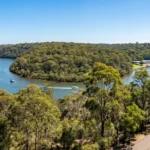
There is a beach in Sydney that does not shout for attention. It does not plaster itself across tourism brochures or star in influencer reels every summer weekend. It sits quietly in its national park surrounds, framed by ancient fig trees, scented by eucalyptus and eucalyptus and sea salt, and watched over by views across the harbour that take your breath away whether it is your first visit or your fiftieth. That beach is Shark Beach at Nielsen Park in Vaucluse, and it is, without question, one of the most genuinely satisfying places to spend a day outdoors in all of New South Wales.
The name alone causes a flicker of hesitation in the uninitiated. Shark Beach. Surely not. But the name is part of the charm, part of the story, and it carries a history that runs far deeper than the gentle turquoise water visible from the sand. Nielsen Park is managed by the NSW National Parks and Wildlife Service as a section of Sydney Harbour National Park. That status matters. It means the lawns are tended, the bushland is protected, the foreshore is cared for, and the overall experience feels a world away from the more chaotic, commercial beaches that line the Sydney coastline. There are no arcades here. No blaring speakers. No shoulder-to-shoulder crowds fighting for a patch of sand. There is, instead, a rare kind of peaceful beauty that makes you feel like a local who has been let in on something special.
This guide covers everything you could possibly want to know about Shark Beach and Nielsen Park. It is written by someone who has walked the Hermitage Foreshore Track barefoot, eaten a pie on the concrete terrace with harbour wind in their hair, and watched kids discover that swimming in a harbour is an entirely different and arguably better experience than being knocked sideways by a Bondi wave. This is the real deal. Read it, save it, and then get yourself down to Vaucluse.
Where Is Shark Beach and How to Get There
Shark Beach sits on the southern foreshore of Sydney Harbour in the upmarket suburb of Vaucluse, approximately nine kilometres east of the Sydney CBD. It forms the centrepiece of Nielsen Park, a sprawling coastal reserve that takes up a generous slice of the South Head peninsula. The beach faces north and slightly west across the harbour, which gives it its protected character and those endlessly photogenic views towards the city skyline, the Harbour Bridge and the Opera House.
The formal address for the park is Greycliffe Avenue, Vaucluse, NSW 2030. Most GPS units will get you to the car park entrance without drama, but it is worth knowing the area before you go because the surrounding streets are narrow, the traffic can back up sharply on warm days, and arriving with a plan makes the experience considerably more enjoyable.
Getting There by Car
From the Sydney CBD, the most direct route takes you via New South Wales Route 1, through Double Bay and Rose Bay, then on into Vaucluse via New South Head Road. The drive typically takes between twenty and thirty minutes outside of peak periods, though it can stretch considerably on summer weekends. The final stretch down Greycliffe Avenue is a single-lane road bordered by stone walls and the sort of heritage-listed homes that make you slow down involuntarily out of admiration rather than caution.
The car park at Nielsen Park is small relative to the beach’s popularity. There are perhaps a hundred spaces, including several designated accessible bays, and on any warm day from late October through to early April they are gone well before nine in the morning. The advice from every experienced visitor is consistent and clear: arrive before eight-thirty or you will be driving up and down Vaucluse streets looking for a street parking spot that may or may not exist. The broader area around Wentworth Road, Fitzwilliam Road and surrounding streets does offer some on-street parking, but the walk back is longer than people expect, especially with young children and beach gear.
If parking is your bugbear and the whole exercise feels too stressful, the next section solves the problem entirely.
Getting There by Public Transport
Bus route 325 runs between Circular Quay and Vaucluse via Double Bay and Rose Bay, and it stops on Greycliffe Avenue within a short, easy walk of the park entrance. The journey from Circular Quay takes roughly thirty-five minutes, give or take traffic. Service frequency on this route is reasonable during the week and improves on weekend mornings when demand picks up. Check the Transport for NSW trip planner at transportnsw.info for live timetable information before you leave.
There is also bus service from Bondi Junction, which is useful if you are coming in from the eastern suburbs rather than the city. Route 380 connects Bondi Junction to Rose Bay, from where connections into Vaucluse are available. Alternatively, catching an Uber or rideshare from Rose Bay takes only a few minutes and avoids any stress entirely.
It is worth noting that there is no ferry service directly to Nielsen Park, which surprises some visitors who assume that most Sydney harbour foreshore destinations are accessible by water. You can, however, catch the ferry to Rose Bay Wharf and either walk the approximately two-kilometre foreshore path or connect by bus. That walk, along the harbour edge, is genuinely lovely and a perfectly reasonable warm-up for a day at the beach.
Getting There by Foot
The Hermitage Foreshore Walk connects Rose Bay to Nielsen Park along the harbour foreshore, and it is one of the best ways to arrive at Shark Beach. The full route is approximately 1.8 kilometres of easy to moderate walking through coastal bushland, past hidden coves, and along sandstone outcrops with views that rotate slowly from Shark Island to the city skyline. We will talk much more about this walk later in the guide, but if you enjoy arriving at a destination having already earned it a little, this approach is deeply satisfying.
The Beach Itself: What Makes Shark Beach Different
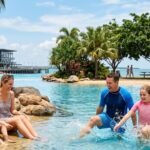
The first thing you notice when you come down the path from the car park and get your first clear view of Shark Beach is how calm the water looks. Not glassy-calm in the way that suggests stillness or boredom, but genuinely settled and inviting in a way that immediately makes you want to get in. This is a harbour beach, which means it is sheltered from the ocean swell that defines the experience at Sydney’s ocean beaches. There are no rips. There are essentially no waves. The water comes in gently, retreats gently, and just sits there looking extraordinarily clear and a shade of blue-green that you might assume required a filter.
The beach itself is roughly two hundred and twenty metres long, which makes it intimate rather than expansive. The sand is fine and white, kept clean by the national park management team and by the absence of the chip shops, carnival rides and general commercial detritus that accumulates around more touristy coastal strips. Behind the sand, a promenade runs parallel to the waterline and connects to the grassed picnic areas, which are shaded by some of the most magnificent fig trees in Sydney. These are old trees with gnarled trunks and enormous canopies that throw cool shadow across the grass from mid-morning onwards. On a hot day, finding a spot under one of them with a view of the water is as close to perfect as an afternoon in Sydney gets.
The beach has a gradual, gentle slope into the water, which makes it forgiving for younger children and for adults who prefer to ease in rather than plunge. The depth increases steadily as you swim out, and the presence of the shark net provides both a practical safety measure and a psychological comfort that many visitors appreciate enormously. The net, maintained by the NSW Shark Meshing Program, is deployed during the swimming season and creates an enclosed area in which you can swim without the background anxiety that sometimes accompanies ocean swimming.
It is also worth mentioning the seawall, which was the subject of a major renovation project that saw the beach closed for an extended period while infrastructure upgrades were completed. The replacement seawall is now in place, and the beach has reopened to considerable local celebration. The work has reinforced the foreshore structure while preserving the character of the place, and the difference is most visible in how soundly the whole precinct sits on the landscape, how well the promenade holds up underfoot, and how confidently the beach presents itself as a long-term proposition rather than a place that is quietly decaying.
The Water
Sydney Harbour water quality has improved dramatically over the past few decades, and Shark Beach is one of the better spots along the harbour foreshore in terms of clarity and cleanliness. The sheltered position means that sediment and debris are less likely to be churned up by wave action, and the strong harbour circulation on this section of the foreshore helps maintain reasonable water quality through most of the year.
The water temperature follows the standard Sydney summer pattern, reaching its warmest in late January and February when you can expect something in the range of twenty to twenty-three degrees Celsius. It stays swimmable through autumn and into the cooler months, though only the dedicated will be in there in July. The shark net, which runs just beyond the swimming area, attracts its own small ecosystem. Seaweed clings to the mesh and small fish congregate around it, which means sharp-eyed swimmers occasionally get a bonus wildlife experience while doing laps of the enclosure.
The Sand and Shore
Shark Beach sand is the kind that compacts well, which matters if you have children who take sandcastle construction seriously. The gentle gradient means the tide-line shifts predictably and the wet sand zone where the best building material lives is consistently accessible. The beach is not so wide that it feels overwhelming, but wide enough that a family can spread out without feeling like they are on top of neighbouring towels, at least outside of peak times.
There are concrete terraces and steps that run along the promenade edge of the beach, and these serve as a kind of social infrastructure for the beach. You will see people lying on them to dry off in the sun, sitting on them with coffee from the cafe, and using them as a vantage point for watching the harbour traffic. There is something very Sydney about lying on warm concrete in the sun after a swim, and Nielsen Park does this particularly well.
Nielsen Park: More Than Just the Beach
The beach is the headline, but Nielsen Park is the whole story. The park covers a generous area of headland and foreshore between Vaucluse and Rose Bay, and it functions as a kind of open-air living room for the eastern suburbs. There are families here on weekday mornings with prams and toddlers. There are office workers here on Friday lunchtimes with sandwiches. There are serious swimmers here at first light, and there are sunset walkers here in the evenings, and throughout all of it there is a quality of ease and gentleness that the place seems to generate naturally.
The Lawns and Picnic Areas
The grassed areas behind and around the beach are what elevate Nielsen Park from a great beach to a genuinely exceptional day out. They are generous, well-maintained, and shaded by the kind of old-growth fig and eucalyptus trees that take a century to grow and would take an act of institutional vandalism to remove. The picnic infrastructure here is good: there are tables, there are benches, there are barbecue facilities, and there is enough space that even on a busy weekend you can find a spot that does not feel crowded.
The lawns are excellent for children because they can range freely while adults maintain easy visual contact from a rug or chair. There is grass that is soft enough to lie on without much preparation and firm enough to kick a ball around on without disappearing into mud after the slightest rain. In late afternoon, when the shadows from the fig trees stretch long across the grass and the light on the harbour turns golden, this is one of the most beautiful places in Sydney.
The Historic Greycliffe House
Nielsen Park contains Greycliffe House, a beautiful heritage-listed Victorian-era sandstone building that dates from the 1850s and now serves administrative functions for the National Parks and Wildlife Service. It is not open to the public for tours, but it is visible from the promenade and adds a genuinely lovely historical dimension to the visit. The house was originally built for a member of the Wentworth family, whose estate covered much of this part of the eastern suburbs, and it remains one of the most intact examples of its era in the Sydney basin.
The presence of Greycliffe House and its associated grounds gives Nielsen Park a layered character that purely recreational spaces lack. There is a sense of time here, of continuity, of a place that has been cherished across generations, and that feeling is real rather than manufactured. Standing on the promenade and looking back at the honey-coloured sandstone against the dark green of the fig trees and the blue of the harbour is a genuinely moving experience if you are inclined toward that sort of thing.
Aboriginal Heritage
The area around Nielsen Park and the broader South Head peninsula has deep significance for the Cadigal people of the Eora Nation, and the park contains evidence of this long history. On the southern end of the beach there is a small cave system within the sandstone that contains examples of Aboriginal rock art. These are genuine, ancient and fragile, and they are managed as part of the national park’s heritage interpretation. They are not roped off and inaccessible, but they are treated with the respect they deserve and visitors are asked to look without touching.
The rock engravings and ochre marks are a reminder that Shark Beach has been a gathering place for people for far longer than European settlement history records. The harbour has always been a source of food, of shelter, of social life and of cultural meaning. Standing at the water’s edge knowing this adds genuine depth to the experience and is worth a moment of quiet acknowledgement.
The Nielsen Park Cafe and Restaurant
The cafe at Nielsen Park sits right at the edge of the beach precinct, close enough to the water that you can watch swimmers and the harbour traffic from your table without craning your neck. It has been an institution at the park for years, having operated through various owners and iterations, and the current offering delivers what this sort of place should deliver: good coffee, generous food, reasonable prices and a staff who understand that their customers have likely already had a morning that was better than most.
The menu covers the full range from light snacks and takeaway items at the kiosk window through to proper sit-down meals in the restaurant area. Breakfast options include the usual combinations of eggs, toast, granola and fruit, and they tend to be done with enough care that they feel like something more than fuel. Lunch moves into burgers, wraps, salads and hot meals, and the portions tend to be generous. The chips, it should be noted, are exactly the kind of hot, slightly salty, aggressively enjoyable chips that people specifically plan to eat when they go to the beach.
Coffee quality is genuinely good, which matters here because this is a place where you might spend several hours and you will want more than one cup. The cafe can get busy through the middle of a warm weekend day, and service occasionally slows when the beach fills up, so the strategy of arriving early works equally well for securing a good table as it does for securing a parking spot. The outdoor tables, which face directly toward the water, are worth waiting for.
The restaurant side of the operation offers harbour views that are legitimately spectacular. On a clear day you can see across to Shark Island, up toward Manly in the distance, and on days with good visibility all the way to the Harbour Bridge. Dining here in the late afternoon, as the light changes and the harbour traffic thickens with sailing boats heading for their moorings, is the kind of experience that Sydney does better than almost anywhere on earth.
Dogs are not permitted in the park, so if that is a constraint it needs to be factored in. The cafe does have some indoor seating which provides shade and protection on days when the harbour wind is more enthusiasm than comfort, and the overall ambience is relaxed and genuinely welcoming rather than the kind of place that makes you feel vaguely judged for coming in with sand on your feet.
Nielsen Park Cafe: Quick Reference
| Category | Details |
| Location | Beachfront, Nielsen Park, Vaucluse NSW 2030 |
| Google Rating | 4.4 |
| Type | Cafe (takeaway kiosk) + Licensed Restaurant |
| Cuisine | Australian cafe fare, all-day breakfast and lunch |
| Views | Direct harbour views, Shark Island, city skyline |
| Coffee | Yes, full espresso bar |
| Alcohol | Licensed restaurant area |
| Dogs Allowed | No, national park restrictions apply |
| Busy Periods | Weekend mornings and warm weather lunchtimes |
| Best Strategy | Arrive early for outdoor table with harbour views |
The Hermitage Foreshore Walk: Sydney’s Best Kept Secret
If you only know Shark Beach as a swimming spot, you are only getting half the story. The Hermitage Foreshore Walk is a roughly 1.8-kilometre coastal trail that connects Nielsen Park to Rose Bay, and it is one of the finest short walks in all of Sydney. That is not hyperbole. It genuinely competes with the Bondi to Coogee Coastal Walk and the Spit Bridge to Manly Walk for sheer quality, and it does so without the crowds that those better-known routes attract on summer weekends.
The track follows the harbour foreshore through coastal bushland and over sandstone outcrops, past small protected coves that look like they belong somewhere considerably more remote than nine kilometres from the Sydney CBD. There are several lookout points along the route where the views across to the city, to the North Shore, and back across Shark Beach hit with the kind of force that makes you stop walking mid-stride to take it in properly.
The walk is classified as easy to moderate. The track surface is uneven in places, with sections of sandstone and compacted gravel, and there are some stairs, but there is nothing technical or demanding about it. A reasonably fit person of any age can manage it comfortably. The entire walk takes between forty-five minutes and an hour at a comfortable pace, though the frequency of views worth stopping for means it often takes longer.
Wildlife along the track includes a reliable population of blue-tongue lizards, various skink species, and enough native bird life to make an ornithologist happy. Kookaburras laugh at you from the branches. Rainbow lorikeets fizz past. The odd brush turkey engineers its enormous compost mound adjacent to the path without the slightest concern for passing humans. On the water side, you might see pelicans, cormorants, and the occasional seal, which have been spotted hauling out on the rocks at the southern end of the walk.
The Hermitage Foreshore Walk is the ideal way to approach Nielsen Park if you are coming from the Rose Bay direction. Walk in, swim, have lunch, walk back. That is a genuinely outstanding day that costs almost nothing and requires minimal planning. It is the kind of Sydney experience that makes you remember why you live here, or why you came.
Walk Details at a Glance
| Feature | Information |
| Total Distance | 1.8 km one way (3.6 km return) |
| Difficulty | Easy to moderate |
| Estimated Duration | 45 to 60 minutes one way |
| Start Point | Nielsen Park, Vaucluse |
| End Point | Rose Bay, near the ferry wharf |
| Track Surface | Sandstone, compacted gravel, some steps |
| Highlights | Harbour views, hidden coves, native wildlife, lookouts |
| Dog Friendly | No, within national park boundaries |
| Best Time | Morning for light and temperature, late afternoon for sunset views |
| Accessibility | Not suitable for wheelchairs or prams throughout |
Shark Beach and Nielsen Park for Families
If there is a single category of visitor for whom Shark Beach is most specifically, most deeply suited, it is families with young children. Every feature of the place seems designed with exactly this group in mind, even though none of it was designed at all. It is just naturally set up for small people and the adults who are responsible for them.
The water is calm. This cannot be overstated as a practical benefit for parents. When your child is three or four or five years old, the idea of taking them to an ocean beach with surf is stressful in ways that require real mental preparation. You are watching the water constantly, calculating wave sets, judging distances, remaining vigilant in ways that prevent you from ever actually relaxing. At Shark Beach, there are no waves. The water laps gently. A toddler can wade to thigh depth and be perfectly stable. A five-year-old can splash around fifty metres from shore without their parent needing to be in immediate contact. The whole experience is calibrated down to a level of gentleness that ocean beaches simply cannot offer.
The shark net adds another layer of reassurance. Parents who are anxious about marine life will find that the enclosed swimming area genuinely reduces that anxiety to something manageable. The net does not create a completely sterile environment and it should not be mistaken for a pool enclosure, but it provides a demonstrably lower-risk environment than open harbour or ocean swimming.
The grassed picnic areas are ideal for children because they can run, play, explore and generally burn energy in the way that children require, while remaining in sight of adults who are sitting on rugs or at picnic tables. The trees provide shade that keeps young skin out of the most dangerous UV exposure. The promenade is wide and smooth and excellent for small children on bikes, scooters or simply on their feet.
The sandcastle potential of the beach is high. Fine, compact sand, a gentle shore, no interference from incoming surf, easy access to wet material: these are ideal conditions. Families with serious sandcastle builders will find the beach delivers exactly what is needed.
For older children and teenagers, the Hermitage Foreshore Walk provides an engaging alternative to simply lying on the beach, and the swimming area is deep enough on the outer edge to be interesting for confident swimmers who want to explore the net structure and the fish life associated with it.
One practical note for families: the change rooms and toilet facilities are solid. The pavilion building houses separate male and female facilities that include shower stalls, which means you can actually clean off properly before the drive home rather than arriving back coated in sand. The facilities close at six in the evening, so late-stay families need to time their departure accordingly.
Family Checklist for Shark Beach
- Arrive before 8:30am to secure parking or catch the 325 bus from Circular Quay
- Bring a beach tent or umbrella for extra shade on hot days
- Pack your own food and drinks, the cafe does well but queues can be long mid-day
- Sun safety essentials: SPF 50+ sunscreen, rashies for the kids, hats
- Bring sandcastle-building tools, the sand is perfect for it
- Small cricket set or frisbee for the lawns
- Water shoes are useful for walking on the concrete terrace
- Change of clothes in the car for the inevitable full sand immersion
- No dogs are permitted in Nielsen Park, plan accordingly
- Change rooms close at 6pm, time your exit
The History Behind the Name: Why Is It Called Shark Beach?
The name Shark Beach is one of those Sydney geographical curiosities that prompts the question but rarely gets a complete answer. The short version is that Sydney Harbour has historically had a significant shark population, and the waters of this particular bay were known for shark sightings in the days before systematic meshing. The name, as many harbour beach names across Sydney were, came from early settlers and fishermen recording what they observed in the water.
The harbour’s shark history is real and well-documented. Grey nurse sharks, bull sharks, and bronze whalers have all been recorded in Sydney Harbour, and bull sharks in particular remain a year-round resident of the harbour system. The meshing program that now protects Shark Beach and many other Sydney harbour beaches was introduced in the mid-twentieth century in response to a period of increasing shark incidents, and it has been maintained continuously since then.
Nielsen Park itself takes its name from Juanita Nielsen, a Danish-born resident of Sydney who became a prominent figure in the campaigns to preserve the heritage character of Victoria Street in Kings Cross during the controversial development period of the nineteen-seventies. Her disappearance in unclear circumstances in 1975 became one of Sydney’s most enduring unsolved mysteries. The park was named in her honour as a recognition of her contribution to the cause of heritage preservation.
The Greycliffe Avenue area and the broader South Head peninsula were part of the Wentworth family estate in the colonial period, and the construction of Greycliffe House in the 1850s reflected the aspirations of wealthy colonists to establish themselves in the landscape with the permanence and prestige of English country estates. The national park designation that came much later preserved the public access to the foreshore that those private estates might otherwise have foreclosed.
When to Visit Shark Beach: Seasons, Crowds and Timing
Shark Beach is open and accessible year-round, but the experience varies considerably across the seasons, and timing your visit well will make a significant difference to what you get out of it.
Summer
Summer, from December through to late February, is the peak season for Shark Beach and the busiest period by a considerable margin. The water is warm, the days are long, and the beach draws visitors from across Sydney seeking the calmer alternative to the ocean beaches. On hot weekends in this period, the car park fills before nine, the beach fills before ten, and the cafe queue can stretch considerably. This is still a great time to visit but it requires commitment to the early start strategy. School holidays intensify this further, and the long weekend around Australia Day is the single busiest point of the year.
The upside of summer is obvious: warm water, blue skies, the full Sydney harbour experience in its most spectacular form. There is also a genuine communal energy to a busy summer day at Shark Beach that is pleasant in its own way, the shared good cheer of a large group of people all doing exactly what they want to be doing in beautiful surroundings.
Autumn
Autumn is arguably the best season to visit Shark Beach, particularly the period from late February through to the end of April. The school holidays are over, the absolute peak of summer heat has passed, the water is still warm from the summer and remains swimmable well into May, and the crowds thin considerably. The harbour light in autumn is extraordinary, with a clarity and warmth that photographers chase specifically. The fig trees in Nielsen Park start to do interesting things with the changing season, and the whole park has a quality of settled, golden calm that summer’s intensity can occasionally overwhelm.
Winter
Winter at Shark Beach is a different but equally valid experience. The crowds are minimal on winter weekdays, the park is often nearly empty on grey mornings, and the harbour views take on a particular dramatic quality when there are clouds building over the North Shore or mist sitting on the water in the early morning. The swimming is cold, genuinely cold, but not impossible, and there is a dedicated cohort of year-round harbour swimmers for whom this is no deterrent.
Winter is actually the ideal season for the Hermitage Foreshore Walk, when the lower temperatures make walking comfortable and the lack of tourist pressure means the track feels genuinely secluded. Pack a warm layer, accept that you probably will not be getting in the water, bring coffee from the cafe and spend a few hours in the park. It is a different kind of good.
Spring
Spring arrivals, particularly from August through to November, catch Nielsen Park in a state of renewal that is genuinely lovely. The lawns are green and fresh, the wildflowers in the coastal bushland along the Hermitage Walk are beginning to do their thing, and the harbour water is starting to warm back toward swimmable temperatures. The crowds are building but have not yet reached the intensity of high summer, which makes this a sweet spot for visitors who want the full experience without the competition.
| Season | Water Temp | Crowd Level | Best For | Parking |
| Summer (Dec-Feb) | 20-23°C | Very High | Swimming, family beach days | Arrive before 8:30am |
| Autumn (Mar-May) | 18-22°C | Moderate | Best overall experience | Easier, still arrive early |
| Winter (Jun-Aug) | 14-17°C | Low | Walking, quiet picnics, photography | Easy |
| Spring (Sep-Nov) | 16-20°C | Moderate | Swimming, wildflowers, walking | Manageable before 10am |
Practical Information: What You Need to Know Before You Go
Entry and Fees
There is no entry fee to Nielsen Park or Shark Beach. The park is free to access and free to use. Parking in the Greycliffe Avenue car park is also free, which contributes to its popularity and to the difficulty of securing a space on busy days. The cafe and restaurant charge market rates for food and drink, and the change room and toilet facilities are free to use.
Accessibility
The main promenade and beach access path from the car park is accessible for people with mobility aids, and there are accessible toilet facilities within the park. The beach sand itself presents the usual challenges for wheelchair users, and the shark net swimming enclosure does not have a specific accessible entry point. The Hermitage Foreshore Walk is not accessible for wheelchairs or prams throughout its full length due to uneven surfaces and steps. For visitors with specific accessibility needs, contacting NSW National Parks directly before your visit to confirm current conditions is the best approach.
Dogs and Pets
Nielsen Park and Shark Beach do not permit dogs or other pets. This is a consistent national parks policy applied across Sydney Harbour National Park properties, and it is enforced. There is clear signage at the park entrance and throughout. If you have a dog, leave them at home or plan a different outing.
Barbecues
Wood and solid fuel barbecues are prohibited at Nielsen Park at all times. This is both a fire safety measure and a heritage preservation consideration. There are no gas barbecue facilities provided within the park, so visitors who want to cook should plan accordingly, either bringing food that does not require cooking or making use of the cafe.
Shade and Sun Safety
The fig trees and other mature specimens within Nielsen Park provide substantial shade across the grassed areas, which is one of the park’s most significant practical advantages over many other Sydney beach locations. On days of extreme UV, however, the direct beach area has limited natural shade. Bringing your own sun shelter, tent or large umbrella is advisable for families who will be spending extended periods on the sand. The UV index in Sydney summer regularly exceeds ten, which is the extreme rating, and sun protection is not optional.
Facilities Summary
| Facility | Available | Notes |
| Car Parking | Yes | Limited, free, arrives early or go by bus |
| Toilets | Yes | Open standard park hours |
| Change Rooms | Yes | Separate male/female, closes 6pm |
| Showers | Yes | Within change room pavilion |
| Cafe/Restaurant | Yes | Open daily, check current hours |
| Picnic Tables | Yes | Throughout park grounds |
| BBQ Facilities | No | Prohibited in park |
| Shark Net | Seasonal | Summer swimming season |
| Dog Access | No | National park restriction |
| WiFi | No | Plan accordingly |
| Rock Art Site | Yes | Southern end of beach, fragile, look don’t touch |
Nearby Attractions: Making a Full Day of It
Nielsen Park and Shark Beach are genuinely excellent on their own, but the surrounding area of Vaucluse, Rose Bay and the eastern suburbs foreshore contains enough other worthwhile stops to build a complete and satisfying day or weekend itinerary around your visit.
Vaucluse House
Located approximately two kilometres from Nielsen Park, Vaucluse House is one of the finest and most intact colonial-era historic houses in Australia. The property was the estate of William Charles Wentworth, the explorer, barrister and politician whose land holdings originally included much of the eastern suburbs foreshore. The house is now managed by Sydney Living Museums and is open to visitors. The gardens alone are worth the visit, with mature specimens and formal planting that give a real sense of nineteenth-century aspiration. The estate grounds are particularly good for picnics, and combining a visit with Shark Beach makes for an excellent day with a historical dimension.
Rose Bay
Rose Bay, accessible via the Hermitage Foreshore Walk or by road, is one of Sydney’s most attractive harbour suburbs and offers a number of additional experiences. The seaplane terminal at Rose Bay is the departure point for scenic flights and Point Piper transfers that offer a completely different perspective on the harbour. The marina and waterfront strip has good cafes and restaurants, and the ferry wharf connects to the city and to Manly. If you are coming to Nielsen Park via public transport, a coffee stop in Rose Bay on the way is a completely reasonable strategy.
Watsons Bay
A short drive or a longer walk south from Nielsen Park brings you to Watsons Bay, one of Sydney’s most beloved harbour destinations. The Gap, the dramatic cliff-top viewpoint at the southern end of South Head, is one of the most powerful natural viewpoints in New South Wales. South Head itself, the very tip of the peninsula, offers views that encompass the entire harbour entrance, the Pacific Ocean and the cityscape in a single sweeping panorama. Doyles Seafood Restaurant has operated at Watsons Bay for well over a century and remains one of the most quintessentially Sydney dining experiences available.
The Bondi to Coogee Walk
For visitors who are in Sydney for several days and want to combine Shark Beach with another premier coastal walk, the Bondi to Coogee Coastal Walk is approximately twenty minutes drive away and offers six kilometres of ocean clifftop walking past five different beaches. The contrast with the sheltered harbour character of the Hermitage Foreshore Walk makes the two routes complementary rather than repetitive, and doing both in the same visit gives a complete picture of the extraordinary variety of Sydney’s coastal landscape.
Swimming Safety at Shark Beach
Shark Beach is one of the safer swimming environments available in Sydney, but it is still open water and it benefits from the same sensible approach that applies to any natural swimming location. Understanding what makes it safe and what limitations that safety has will help you enjoy it confidently and responsibly.
The Shark Meshing Program
New South Wales operates a shark meshing program along beaches throughout the state, including Sydney Harbour beaches. The program has operated since the nineteen-thirties and has a strong safety record. The nets are not a complete enclosure and they are not designed to create an impermeable barrier. They work by disrupting shark movement patterns in the vicinity of beaches and by catching sharks that are present in the area. The program is seasonal at most harbour beaches and is in operation during the main swimming season.
It is important to understand that the shark net at Shark Beach does not guarantee that no shark will ever enter the swimming area. What it does is reduce the probability of an encounter significantly. This is the same basis on which ocean beach meshing operates. Swimming within the designated area and being aware of your surroundings remains appropriate.
Water Conditions
The lack of ocean swell at Shark Beach eliminates the rip current risk that makes ocean beaches genuinely dangerous for inexperienced or young swimmers. However, tidal flow through the harbour creates some current in the swimming area, particularly on strong tide movements. Most swimmers will not notice this as a problem, but if you are swimming with young children or with non-strong swimmers, being aware of this and staying within the shallow-to-mid section of the enclosure is sensible.
The drop-off toward the shark net is real and the depth increases from paddling depth to over-your-head over a fairly short distance. This is worth explaining to children before they get in.
No Lifeguards
Shark Beach does not have lifeguard supervision. This is one of the important differences from the ocean beaches managed by Surf Life Saving Australia, which have professional lifeguards on duty during the main season. At Shark Beach, responsibility for swimmer safety rests with the individuals and groups present. Swimming with a companion is sensible, particularly in less crowded conditions. Monitoring children attentively and knowing the locations of the nearest emergency contact points is advisable.
Photography at Shark Beach and Nielsen Park
Nielsen Park is one of the genuinely great photography locations in Sydney, and this is not just a matter of the harbour views, which are exceptional, but of the total composition of the place: the fig trees, the sandstone architecture of Greycliffe House, the heritage changing pavilion, the promenade, the small beach and the wide water beyond. There is a harmony between the human-made and natural elements here that many Sydney locations lack.
The best light for photography at Nielsen Park is in the early morning, when the sun is low and the harbour surface catches gold from the east, and in the late afternoon, particularly in the hour before sunset, when everything is warm and the contrast between shadow and light under the fig trees is extraordinary. Midday summer light is harsh and tends to flatten the water into a uniform glare that does not do the location justice.
The view from the terrace of the cafe restaurant looking out over the harbour toward the city is one of the genuinely great compositions available in Sydney. On clear winter mornings, when the air is crisp and the city appears in sharp relief across the harbour, it can be stunning. The rock art site at the southern end of the beach can be photographed but should not be touched or disturbed in any way. Sandstone photography at this location is particularly rewarding given the variety of forms and textures available.
Insider Tips: Getting the Most Out of Your Visit
| Tip | Why It Matters |
| Arrive before 8:30am on warm days | Car park fills completely. Streets fill quickly after that. |
| Bus 325 from Circular Quay removes the parking problem entirely | Thirty-five minutes, arrives near the gate, stress-free. |
| Come on a weekday if your schedule allows | The crowd drops dramatically Monday to Thursday. |
| Walk the Hermitage Track in rather than driving | Better experience and eliminates the parking equation. |
| Order from the kiosk window rather than the restaurant for quick food | Faster service when the cafe is at peak capacity. |
| Bring a sunshade for the beach area itself | Shade is plentiful on the lawn, limited on sand. |
| Go to the southern end of the beach early | Rock art, fewer people, best sandcastle sand. |
| Sunset visits are spectacular even without swimming | Harbour light in the evening is outstanding. |
| Check school holiday dates before planning a visit | Traffic, parking and crowds are all significantly worse. |
| Combine with Vaucluse House for a full day | Two kilometres away, excellent gardens and history. |
What Visitors Actually Say About Shark Beach
The consistency of visitor impressions about Shark Beach is striking. Across thousands of individual reviews and comments, a set of recurring observations appears with reliable frequency, and they are worth presenting because they tell you more about the experience than any promotional description.
The calmness of the water is the single most common theme in positive feedback. Visitors who have come from ocean beaches specifically seeking a gentler experience report that the difference is exactly as significant as they had hoped. Parents with young children describe the relief of being able to let their kids into the water without constant heightened vigilance. Adults who are not confident ocean swimmers report finding the harbour environment genuinely accessible.
The setting is the second dominant theme. The combination of beach, lawn, shade, historic buildings and harbour views creates an atmosphere that visitors consistently describe as unlike anywhere else in Sydney. Phrases like secluded, peaceful, timeless and special appear repeatedly. The sense that you are in a national park rather than a developed beach precinct clearly resonates.
The parking is the single most consistent complaint. This is worth taking seriously because frustrated visitors who cannot find a park sometimes characterise the whole experience negatively from that starting point. The solution is entirely in the visitor’s hands: arrive early or take public transport. Both strategies work reliably.
The cafe receives generally positive commentary with specific praise for the views and the quality of the coffee, and occasional notes about service speed at peak times. The change rooms are consistently praised for their quality and size. The rock art at the southern end is specifically mentioned by a significant number of visitors as an unexpected and moving discovery.
Read: Best Sunrise Spots in SydneyFrequently Asked Questions About Shark Beach Sydney
Is Shark Beach actually safe from sharks?
Yes, in the practical and meaningful sense of that question. The beach is protected by shark meshing as part of the NSW Shark Meshing Program during the main swimming season. The net does not create a fully sealed enclosure but it significantly reduces the probability of a shark encounter. The beach has an excellent safety record. The name refers to historical shark activity in the harbour rather than to a current hazard.
Is there a lifeguard at Shark Beach?
No. Shark Beach at Nielsen Park does not have lifeguard supervision. Swimmers are responsible for their own safety and that of their group. If you are bringing children or non-confident swimmers, extra supervision is your responsibility. The beach is generally safe for confident swimmers but the absence of lifeguards is worth factoring into your planning.
What is the best time to visit Shark Beach?
For the fullest experience with manageable crowds, late autumn (March to May) is the sweet spot: the water is still warm from summer, the crowds have thinned, and the park is beautiful. If summer is your only option, arrive before 8:30am on weekdays, or even earlier on weekends. The beach is worth visiting any time of year, including winter, when the park is quiet and the harbour views are often more dramatic.
Can I bring my dog to Shark Beach?
No. Dogs and other pets are not permitted anywhere within Nielsen Park or Shark Beach at any time. This is a national park restriction. There is clear signage at the entrance and it is enforced.
Is there parking at Nielsen Park?
Yes, there is a free car park on Greycliffe Avenue, but it is small relative to the beach’s popularity and fills very quickly on warm days, typically before 9am. On-street parking in surrounding Vaucluse streets is available but involves a longer walk. The consistently recommended approach for busy periods is to catch Bus 325 from Circular Quay, which stops near the park entrance.
Is there a cafe or restaurant at Shark Beach?
Yes. The Nielsen Park Cafe and Restaurant operates at the beach with both a takeaway kiosk and a sit-down restaurant area. The restaurant is licensed and has direct harbour views. The kiosk offers a faster and more casual option for snacks, coffee and light meals. Both are popular and can be busy during peak times. Check current operating hours before visiting, as these can vary seasonally.
Is Shark Beach good for kids?
It is one of the best beaches in Sydney for families with young children. The water is calm and has no surf, the beach has a gentle gradient, the shark net creates a safer enclosed swimming area, the grassed picnic areas are excellent for running and playing, and the overall environment is safe and manageable. It is specifically recommended for families with toddlers and young children who would find ocean beaches too challenging.
What is the Hermitage Foreshore Walk?
The Hermitage Foreshore Walk is a 1.8-kilometre coastal trail connecting Nielsen Park to Rose Bay along the Sydney Harbour foreshore. It passes through coastal bushland, over sandstone outcrops, past hidden coves, and through several excellent lookout points with harbour views. It is rated easy to moderate and takes approximately 45 to 60 minutes one way. It is one of the best short walks in Sydney and an excellent complement to a day at Shark Beach.
Is there Aboriginal heritage at Nielsen Park?
Yes. There is a small cave system at the southern end of Shark Beach that contains Aboriginal rock art. This is managed as a heritage site within the national park. The art is fragile and visitors are asked to observe without touching. The site adds significant historical and cultural depth to the park and is worth seeking out as part of your visit.
When did Shark Beach reopen after the seawall works?
Shark Beach at Nielsen Park was closed for an extended period while NSW National Parks and Wildlife Service undertook a major seawall replacement project. The beach has since reopened following completion of the works. The new seawall infrastructure reinforces the foreshore for the long term while preserving the character of the site. Visitors should check NSW National Parks current information for any remaining works or minor closures before visiting.
How do I get to Shark Beach by public transport?
Bus route 325 runs between Circular Quay and Vaucluse, stopping on Greycliffe Avenue close to the Nielsen Park entrance. The journey from Circular Quay takes approximately 35 minutes. Services from Bondi Junction are also available via connecting buses. There is no direct ferry service to Nielsen Park, though ferries to Rose Bay can be combined with either a short bus connection or a walk via the Hermitage Foreshore Track.
Can I kayak to Shark Beach?
Yes, Shark Beach is accessible by kayak and small boat from the harbour. The sheltered bay makes it a reasonable destination for experienced paddlers. If arriving by boat, there are some anchoring areas in the bay, but access to the beach from the water is limited and the shark net area is obviously not available for boat passage. Noise restrictions apply in the vicinity of Nielsen Park due to nearby residential areas.
Final Thoughts: Why Shark Beach Deserves Your Attention
Sydney has no shortage of beaches. From Manly in the north to Cronulla in the south, the city’s relationship with the coast is one of the most defining and celebrated aspects of its character. But within that abundance, Shark Beach at Nielsen Park occupies a particular and somewhat irreplaceable position. It is the harbour beach that does everything right: calm water, manageable scale, extraordinary setting, real history, a cafe worth the visit, a walk worth doing, and a national park framework that has kept the whole thing intact across decades of development pressure that transformed the surrounding suburbs beyond recognition.
It is not always the most convenient beach to access. The parking situation is a genuine challenge that requires either an early start or a willingness to take the bus. On peak summer days it fills up in ways that can feel overwhelming if you are not prepared. These are real friction points that the honest visitor guide needs to acknowledge.
But address those practical matters, which are entirely addressable, and what you find is one of the finest accessible beach experiences in New South Wales. The water is safe and beautiful. The surroundings are protected and magnificent. The Aboriginal rock art at the southern end adds a dimension of meaning that is absent from most Sydney beach experiences. The Hermitage Foreshore Walk connects the place to the broader harbour landscape in a way that makes a day here feel genuinely complete.
If you have not been to Shark Beach, go. If you have been but it has been a while, go back. Take the bus. Arrive with something to eat and something to read. Get in the water. Walk the Hermitage Track in the late afternoon. Watch the harbour light change on the way home. That is a genuinely good day in one of the world’s genuinely great cities.