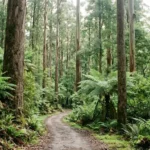
There is a place where mountain ash trees tower so high they seem to prop up the sky, where fern gullies stretch out like something from a prehistoric world, and where the air carries the kind of clean, eucalypt-scented freshness that city lungs quietly crave. That place is the Dandenong Ranges, and the best part is that it sits barely 35 kilometres east of the Melbourne CBD.
Melbourne is one of Australia’s most celebrated cities — coffee culture, arts laneways, world-class sport — but even the most devoted city lover needs to step out of the concrete grid every now and then. The Dandenong Ranges, or simply ‘the Dandenongs’ as locals call them, answer that need better than almost anywhere else in Victoria. They are accessible, beautifully varied, and genuinely spectacular in every season.
Whether you are planning a solo sunrise hike, a slow weekend with a partner involving high tea and antique shops, a family adventure with kids who need to burn energy outdoors, or a longer retreat into true bush serenity — the Dandenongs accommodate all of it without effort. This guide covers everything you need to know to make the most of this remarkable region, written from a genuine on-the-ground Australian perspective.
Dandenong Ranges: Quick Reference at a Glance
| Detail | Information |
| Location | Yarra Ranges & Knox, Victoria — approx. 35–50km east of Melbourne CBD |
| Google Rating | 4.8 |
| Highest Peak | Mount Dandenong at 633 metres above sea level |
| Nearest Suburb Entry Points | Ferntree Gully, Belgrave, Montrose, Tecoma |
| Key National Park | Dandenong Ranges National Park (Parks Victoria managed) |
| Famous Villages | Sassafras, Olinda, Emerald, Kallista, Belgrave, Menzies Creek |
| Iconic Attraction | Puffing Billy Railway — operating since 1900 |
| Best Walks | 1000 Steps (Kokoda Track Memorial Walk), Sherbrooke Forest Loop, Olinda Falls Trail |
| Best Lookouts | SkyHigh Mount Dandenong, Burkes Lookout, Kalorama Lookout |
| Best Time to Visit | Spring (wildflowers) and autumn (cool air, golden light) — all four seasons offer something |
| Getting There | Car via Burwood Highway or Maroondah Highway; train to Belgrave via Metro/Puffing Billy |
| Entry Cost | National Park walking trails are free; some attractions charge separate fees |
Why the Dandenong Ranges Still Surprise Even the Locals
Ask any Melburnian where they go when they need to clear their head and, if they have made the trip even once, the Dandenongs comes up almost immediately. There is a reason for that. Unlike many so-called ‘nature escapes’ that require hours of driving and careful itinerary planning, the Ranges are unapologetically easy to access — and yet they feel genuinely remote once you are in among the trees.
The mountain range stretches across what geologists describe as ancient Devonian granite, pushed skyward over hundreds of millions of years. The result is a complex of ridges, gullies, and peaks draped in some of Australia’s most distinctive temperate rainforest. Mountain ash trees — Eucalyptus regnans, the tallest flowering plant on earth — dominate the ridgelines, their trunks climbing skyward in a way that makes the rest of the world seem small.
Below these giants, a dense understory of tree ferns, mosses, and wildflowers fills every available space. In the fern gullies, particularly around Sherbrooke and Clematis, the landscape carries a Jurassic quality that no photograph ever quite captures. You have to stand in the middle of it, look up through the canopy, and just breathe.
What makes the Dandenongs genuinely remarkable — and why they continue to attract visitors both domestic and international — is the way the natural environment coexists with human activity. Charming villages tucked between ridges. Galleries and studios operated by resident artists. Orchards and farms selling directly to the public. A century-old steam railway still running through the forest. All of this sits within what amounts to an hour’s casual drive from Flinders Street Station.
Getting to the Dandenong Ranges: Your Transport Options
By Car
Driving remains the most popular and flexible way to explore the Dandenongs, and for good reason. The winding roads through the range are half the experience. Taking the Burwood Highway from inner Melbourne and climbing into the hills via Upper Ferntree Gully gives you an immediate sense of elevation as the suburbs thin out and the tree canopy closes in overhead. For the Sassafras and Olinda area, the Maroondah Highway through Ringwood and Croydon is the more direct route.
Parking is generally available at major trailheads, gardens, and town centres, though the 1000 Steps car park can fill quickly on weekend mornings. Arriving before 9am on busy days is strongly recommended if that walk is on your list.
By Public Transport
The Metro train network runs a dedicated Belgrave line from Flinders Street and Melbourne Central that terminates at Belgrave station — the very point where Puffing Billy begins its journey. Journey time from the city is roughly 60–75 minutes depending on your stop. From Belgrave you can walk, take a local bus, or connect directly to Puffing Billy.
Puffing Billy itself is a form of public transport in the most delightful sense — it runs through Menzies Creek, Clematis, Emerald, and through to Gembrook, making it possible to travel through the heart of the Ranges without needing a car at all. This is particularly appealing for visitors who want to enjoy the scenery without worrying about navigating the roads.
Things to Do in the Dandenong Ranges: A Complete Breakdown
1. Walk the 1000 Steps — Kokoda Track Memorial Walk
This is, without question, the most visited walk in the Dandenongs and one of the most well-known short hikes in all of Victoria. Located in the Kokoda Track Memorial Walk section of the national park near Upper Ferntree Gully, the track climbs 1000 timber-edged steps through towering mountain ash and ferny gullies to a ridge top with filtered views through the canopy.
The walk takes most people between 60 and 90 minutes to complete as a return journey, though fit walkers often loop via the Ridge Track to add distance and variety. The lower section of the walk is paved and accessible for those with mobility considerations, while the upper steps require moderate fitness. Interpretive signage along the trail pays tribute to the Kokoda veterans — it is a genuinely moving walk as much as a physical one.
Go early on weekends. The car park at the base can fill by 8:30am on sunny Sundays, and the steps get crowded by mid-morning.
2. Ride Puffing Billy — Australia’s Iconic Steam Train
There are few Australian tourism experiences that have endured as beautifully as Puffing Billy. Built in 1900 to serve the small farming and timber communities scattered through the hills, this narrow-gauge steam railway has been operating almost continuously for well over a century — and it remains one of the best ways to experience the landscape of the Dandenongs at a pace that actually allows you to take it in.
The train runs from Belgrave through Menzies Creek, Emerald, Lakeside, and continues to Gembrook through the Cardinia Shire. The open-sided carriages invite passengers to hang their feet out over the forest — a tradition that the operators encourage rather than discourage. The journey through ferny cuttings and across the historic Monbulk Creek trestle bridge is genuinely scenic.
Puffing Billy operates most days of the year (closed Christmas Day). Bookings are recommended, particularly for the Belgrave to Gembrook full run which is the longest and most popular journey. The Emerald Lake Park station makes an excellent stop if travelling with young children who want some play space along the way.
3. Explore Sherbrooke Forest
Sherbrooke Forest occupies a deep valley on the western face of the range near Belgrave South and Kallista, and it is one of those places that simply defies easy description. The forest is cool and still even in summer, the tree ferns form a continuous green canopy at head height along the creek flats, and the mountain ash above them seem to go on forever.
The Sherbrooke Loop Walk covers around 7 kilometres and takes most walkers two to three hours at a comfortable pace. Lyrebirds are a regular feature of the forest floor — the males can often be heard before they are seen, their mimicry so accurate it can be unsettling until you realise what you are listening to. Dawn visits dramatically increase lyrebird sighting chances.
The forest also connects to the Kokoda Track via ridge trails for those wanting to combine the two walks into a longer half-day excursion.
4. Visit the National Rhododendron Gardens at Olinda
Perched on a hillside at Olinda, the National Rhododendron Gardens cover 40 hectares of cultivated and naturalistic garden beds showcasing one of the largest collections of rhododendrons and azaleas in the Southern Hemisphere. Spring is the peak season — typically from September through to mid-November — when the entire garden explodes in shades of pink, crimson, white, and purple.
Outside of the flowering peak, the garden remains an excellent destination. The woodland sections, grassed slopes, and distant views across the valley make it worth visiting at any time of year. Entry fees apply, and the gardens are managed by Parks Victoria. A small cafe on-site handles morning teas and light lunches on busy days.
5. Take in the View from SkyHigh Mount Dandenong
At 633 metres above sea level, Mount Dandenong is the highest point in the range, and SkyHigh occupies a commanding position at the summit. On a clear day — and there are many of them — the panoramic view sweeps across the entire Melbourne metropolitan area, out to Port Phillip Bay, across to the Mornington Peninsula, and in exceptional conditions all the way to the You Yangs and the Otways on the horizon.
Beyond the view itself, SkyHigh features formal gardens, a hedge maze, giant outdoor sculptures, and a bistro that does solid breakfasts and lunches. Sunset visits are especially popular, with the city gradually lighting up as the sky darkens — a genuinely beautiful experience. Burkes Lookout, a short drive from the summit, offers a different perspective looking north toward the Macedon Ranges.
6. Wander the Villages: Sassafras, Olinda, Emerald and Beyond
The villages tucked into the folds of the Dandenongs are as much an attraction as the natural scenery. Sassafras sits on a narrow ridge road and is famous for Miss Marple’s Tea Room, a handful of excellent antique shops, a beloved chocolate shop, and the kind of weekend atmosphere where nobody appears to be in a hurry.
Olinda offers a slightly larger village centre with galleries, boutiques, a couple of good cafes, and immediate access to the Rhododendron Gardens. Emerald has a country town feel with independent shops and proximity to the lake and Puffing Billy stops. Kallista is quieter still — a cluster of houses in the trees with a small general store and creek walks nearby.
Driving between the villages on the ridge roads is itself deeply enjoyable. The road from Olinda to Kallista to Sherbrooke winding through the canopy on a quiet weekday is one of those drives that reminds you why you wanted a car in the first place.
7. TreeTops Adventure — High Ropes Above the Forest
For those who want their encounter with the Dandenong tree canopy to be rather more vertical, TreeTops Adventure at Adrenalin Forest in the park near Belgrave offers a series of high rope courses and zip lines suspended through the mountain ash trees. Suitable for both children and adults with varying levels of difficulty across different course grades, it makes for an excellent half-day activity and a memorable way to see the forest from above.
8. Pick Your Own at the Orchards and Farms
The lower slopes of the Dandenongs around Silvan, Kallista, and the Yarra Valley foothills are home to some of Victoria’s most productive cherry, berry, and apple orchards. During harvest season — cherries typically from November through January, berries from December through March — many of these operations open for pick-your-own visitors.
Cherry Hill Orchards near Wandin is one of the most established, while various smaller berry farms pop up in the Silvan area. There is something fundamentally satisfying about eating fruit within minutes of pulling it off the plant, and the Dandenong fringe delivers that experience within easy reach of Melbourne.
Best Time to Visit the Dandenong Ranges: Seasonal Guide
| Season | Months | What to Expect & Highlights |
| Spring | Sept–Nov | Rhododendron Gardens in full bloom; wildflowers along forest trails; mild temperatures ideal for walking; busier on weekends |
| Summer | Dec–Feb | Warm days with cool forest shade; cherry and berry picking season; SkyHigh sunsets; early morning walks before midday heat |
| Autumn | Mar–May | Softer light, golden tones, and cooler air; excellent walking conditions; fewer crowds; orchard harvest continues through March |
| Winter | Jun–Aug | Misty mornings and dramatic valley fog; village cafes busy with weekend visitors; occasional cold snaps; lyrebirds particularly vocal |
Where to Eat and Drink in the Dandenong Ranges
One of the quiet pleasures of a Dandenongs day trip is the quality of food and beverage options tucked away in the villages. This is not a fast-food corridor — it is a region where small operators and independent cafes set the tone, and where a long lunch is considered entirely appropriate.
Miss Marple’s Tea Room — Sassafras
A Sassafras institution. This charming tearoom has operated for decades and continues to draw visitors for traditional high teas, scones with jam and cream, and the kind of relaxed service that makes it easy to stay far longer than intended. Bookings are essential on weekends.
The Cuckoo Restaurant — Olinda
A long-standing landmark that offers a lavish smorgasbord experience with live entertainment — a peculiar and beloved institution in the Dandenongs that has no real equivalent anywhere else in Victoria.
Ranges Brewing Co. — Monbulk
A craft brewery tucked into the hills with excellent beers brewed on-site and a food menu that takes its produce seriously. A superb option for a relaxed afternoon beer with a view of the surrounding hills.
Village stores and farmgate stalls
Throughout the Dandenongs and particularly along Monbulk Road and the Olinda township, roadside stalls sell fresh eggs, home-preserves, seasonal fruit, cut flowers, and locally grown produce directly from the property. These informal spots are worth stopping at whenever you see them open.
Wildlife in the Dandenong Ranges: What You Might See
The Dandenong Ranges National Park and its surrounding reserves support a remarkable variety of native wildlife — far more than most first-time visitors expect to encounter within such easy reach of a major city.
- Superb Lyrebird: The forest’s most celebrated resident. Males perform extraordinary mimicry displays, copying the calls of up to 20 other species plus chainsaws, cameras, and even car alarms from memory. Sherbrooke Forest is one of the most reliable places in Victoria to see them.
- King Parrot and Crimson Rosella: Abundant across the Dandenongs, particularly around picnic areas and village gardens where they are accustomed to people.
- Short-beaked Echidna: Commonly spotted along trails and roadsides, particularly in the morning and late afternoon. They largely ignore human observers.
- Common Brushtail and Ringtail Possums: Abundant. Evening walks in any of the villages will almost certainly produce possum sightings.
- Swamp Wallaby: Regularly seen along bush edges and forest trails, particularly at dawn and dusk.
- Platypus: Sighted occasionally in Sherbrooke Creek and other clear-running waterways, though they are secretive and sightings should be considered a bonus.
Wildlife observation in the Dandenongs rewards patience and quiet movement. The standard practice of staying on tracks, keeping dogs leashed, and keeping noise down is both a courtesy requirement and the most effective strategy for actually seeing animals.
Suggested One-Day Itinerary: Getting the Most From Your Visit
| Time | Activity & Notes |
| 7:00–8:00am | Depart Melbourne. Aim for the 1000 Steps car park before 8am to secure parking and enjoy the walk before crowds build. Bring water and wear walking shoes. |
| 8:00–9:30am | Walk the 1000 Steps — Kokoda Track Memorial Walk. Take the Ridge Track return for extra distance. The forest is especially atmospheric in morning light. |
| 9:30–11:00am | Drive to Sassafras (15 minutes). Grab breakfast at one of the village cafes. Browse the antique shops at a leisurely pace. |
| 11:00am–12:30pm | Drive to Olinda. Visit the National Rhododendron Gardens. Allow 60–90 minutes to walk the main circuit. Check seasonal flowering calendar before your visit. |
| 12:30–1:30pm | Lunch in Olinda at one of the village cafes or restaurants. Local produce options available at farmgate stalls on the way. |
| 1:30–3:00pm | Drive to SkyHigh Mount Dandenong. Explore the gardens and hedge maze. Take in the panoramic view across Melbourne — bring binoculars on clear days. |
| 3:00–4:30pm | Take the scenic drive through Sherbrooke Forest via Kallista. Stop for a short walk in the fern gullies. Watch for lyrebirds and king parrots. |
| 4:30pm onward | Return to Melbourne or extend the day with a sunset dinner at SkyHigh or in Emerald township before heading back. |
Practical Tips for Visiting the Dandenong Ranges
- Arrive early on weekends — the 1000 Steps car park fills by 8:30am in peak season and popular village cafes run long waits after 10am.
- Wear layered clothing regardless of the Melbourne forecast — temperatures in the range can be four to seven degrees cooler than the city, and the forest holds moisture that makes it feel cooler still.
- Carry cash if planning to stop at farmgate stalls or smaller craft markets — card payment is not always available.
- Check Parks Victoria for any fire danger closures, particularly from November through March. The Dandenongs are in a high fire risk zone and conditions can change quickly.
- Dogs are permitted on-lead in car parks and some designated areas but are not allowed on national park walking trails. Check individual attraction rules before bringing your pet.
- Book Puffing Billy tickets in advance, especially on school holidays and long weekends. The Belgrave to Gembrook full journey sells out weeks ahead during peak periods.
- Photography is best in the early morning when the forest is still and misty. The golden light through the mountain ash canopy in the first hour after sunrise is exceptional.
Read Also: Cremorne Point Walk
Final Word: Why the Dandenong Ranges Deserve a Spot on Every Melbourne Itinerary
There is no shortage of things to do in and around Melbourne, and the competition for a visitor’s time is fierce. But the Dandenong Ranges offer something that no city museum, restaurant, or rooftop bar can replicate — genuine immersion in a natural environment that is ancient, complex, and quietly magnificent.
The fact that this environment sits barely thirty-five kilometres from one of Australia’s largest cities makes it not just a pleasant option but something close to a responsibility. To visit Melbourne and not make the drive into the Dandenongs is, as more than a few locals will tell you, to miss a fundamental part of what this corner of Victoria is about.
Whether you come for the walks, the views, the food, the wildlife, the train, the gardens, or simply the feeling of standing among trees that have been growing since before European settlement began — the Dandenong Ranges will give it to you. And almost certainly send you back for more.
Frequently Asked Questions About the Dandenong Ranges
How do I spend a day in the Dandenong Ranges?
The ideal Dandenongs day starts early with the 1000 Steps walk in Upper Ferntree Gully, followed by a mid-morning coffee in Sassafras. From there, the National Rhododendron Gardens in Olinda make for an excellent late-morning visit, before lunch in one of the village cafes. The afternoon suits a drive through Sherbrooke Forest, a visit to SkyHigh for the panoramic view, and perhaps a stop at a farmgate stall on the way back down. The full circuit described in the itinerary above fits comfortably into eight to nine hours.
Is there public transport to the Dandenong Ranges?
Yes, and it is surprisingly good. The Metro Belgrave train line runs from Flinders Street and Melbourne Central to Belgrave station, with a journey time of around 60 to 75 minutes. From Belgrave you can board Puffing Billy, which travels through Menzies Creek, Emerald, Lakeside, and on to Gembrook — allowing you to access the heart of the Dandenongs without a car. Local bus services also operate through some townships. That said, having your own vehicle opens up considerably more flexibility, particularly for the village drives and lookout visits that are difficult to reach by public transport.
Are the Dandenong Ranges a rainforest?
Technically, parts of the Dandenongs qualify as cool temperate rainforest — a specific vegetation type defined by closed canopy, high moisture, and the dominance of certain tree ferns and myrtle beech. The fern gullies of Sherbrooke Forest and the deeper valleys in the national park have genuine rainforest character. However, much of the range is dominated by mountain ash eucalypt forest, which is related but distinct from rainforest in its structure. The experience on the ground, particularly in the gullies, very much resembles a rainforest in atmosphere even where the strict botanical definition becomes technical.
Is the Dandenong Ranges free to visit?
The national park walking trails — including the 1000 Steps, Sherbrooke Forest tracks, Olinda Falls, and the majority of day walks — are completely free of charge. Car parks at major trailheads are also free. Where costs apply, they are for specific attractions: the National Rhododendron Gardens charge an entry fee, SkyHigh Mount Dandenong charges for the maze and some garden areas, and Puffing Billy tickets are priced by journey length. TreeTops Adventure charges for its rope courses. Village cafes, restaurants, and shops operate as normal commercial businesses. Overall, it is entirely possible to spend a full and rewarding day in the Dandenongs on a modest budget.
What wildlife can I see in the Dandenong Ranges?
The Dandenongs support a wide range of native wildlife that is accessible to the casual visitor. Superb Lyrebirds are among the most sought-after sightings — Sherbrooke Forest is one of the best places in Victoria to reliably encounter them. King Parrots and Crimson Rosellas are abundant throughout. Short-beaked Echidnas are commonly spotted on walking trails, and Swamp Wallabies are regularly seen at forest edges particularly in the early morning and evening. Common Brushtail Possums are abundant in every village after dark. Platypus have been recorded in Sherbrooke Creek but require patience and luck.
Can I visit the Dandenong Ranges in winter?
Absolutely, and winter has a quiet appeal that summer and spring cannot match. Misty mornings in the fern gullies, crackling wood fires in village cafes, smaller crowds on the walking trails, and lyrebirds at their most vocal all make winter visits genuinely worthwhile. Temperatures can drop to near zero overnight and single digits during the day, so layered warm clothing is essential. The roads through the range occasionally receive light frost in the coldest weeks, so check road conditions if driving up very early in the morning from late June through August.