Warrnambool sits on Victoria’s Shipwreck Coast like a well-kept secret that too few Australian families have properly explored. Tucked roughly 265 kilometres south-west of Melbourne along the Great Ocean Road, this thriving coastal city delivers everything a family could want from a regional getaway — wild beaches, free playgrounds, native wildlife encounters, maritime history and one of the most spectacular whale nurseries in the Southern Hemisphere. And the best part? A huge chunk of what makes Warrnambool extraordinary costs absolutely nothing.
Families who fly straight past Warrnambool on their way to the Twelve Apostles are missing the point entirely. While the Apostles are undeniably dramatic, Warrnambool is the kind of place where kids slow down, actually look around and remember what they saw weeks later. The adventure playground at Lake Pertobe is genuinely world-class. The whale watching platform at Logans Beach has no admission charge. The volcanic landscape at Tower Hill keeps children talking about emus and koalas for the entire drive home. Warrnambool earns its place as one of regional Victoria’s finest family destinations — and this guide proves exactly why.
Whether you are planning a long weekend break from Melbourne, building a Great Ocean Road itinerary, or looking for a Victorian coastal destination that does not feel like a tourist trap, Warrnambool has you covered. Below you will find every activity, attraction, beach, park and hidden gem worth visiting — broken down by type, age group and season — so you can plan a genuinely memorable trip for your family.
Quick Reference: Family Activities at a Glance
Use this table to plan your visit at a glance. Full details for each activity follow throughout this guide.
| Activity | Cost | Best Age | Best Season |
| Lake Pertobe Playground | Free | All ages | Year-round |
| Logans Beach Whale Watch | Free | All ages | July–October |
| Flagstaff Hill Maritime Village | Paid | 5+ | Year-round |
| Tower Hill Wildlife Reserve | Free | All ages | Year-round |
| Deep Blue Hot Springs | Paid | 5+ (daytime) | Year-round |
| Warrnambool Wildlife Encounters | Paid | All ages | Year-round |
| Warrnambool Botanic Gardens | Free | All ages | Year-round |
| Stingray Bay & Breakwater | Free | All ages | Year-round |
| Foreshore Promenade | Free | All ages | Year-round |
| Allansford Cheeseworld | Free entry | All ages | Year-round |
| Warrnambool Art Gallery | Free | All ages | Year-round |
| Mini Golf by the Sea | Paid | 3+ | Year-round |
1. Lake Pertobe Adventure Playground — Warrnambool’s Crown Jewel for Kids
There is a reason families return to Lake Pertobe time and time again. This is not your average suburban playground. Spanning a full eight hectares of green lakeside parkland, Lake Pertobe Adventure Playground is consistently rated among the best outdoor play spaces in regional Victoria — and for good reason. The sheer scale of it hits you the moment you arrive, and kids of every age immediately scatter in different directions, each finding something that speaks to them.
Giant flying foxes zip across open grass. Enormous slides demand a short climb but deliver a long ride. A timber maze challenges older kids and defeats younger ones in the best possible way. A climbing structure complete with a water play element keeps toddlers cool on warm days. A separate toddler zone means younger children get their own space without the chaos of older kids bombing past them. Sand pits, swings, and a modern super-slide round out an extraordinary offering that costs families absolutely nothing to access.
But Lake Pertobe is more than just a playground. The surrounding parkland includes scenic walking trails that meander along the lake edge, perfect for parents who want to stretch their legs while the children burn energy nearby. Picnic tables and free BBQ facilities are scattered throughout, making a full day here completely plausible. Pack a lunch, bring a frisbee, and settle in.
Beyond the playground: The Lake Pertobe precinct is home to lawn tennis courts, a full athletics track, a skateboard park and a mini golf course that charges a small fee. Seasonally, pedal boats and motor boats can be hired for time on the water — a hit with children aged around six and up. The motorboat hire is a Warrnambool institution, with brightly coloured craft that families have been steering around the lake’s small islands for generations.
Practical details: Lake Pertobe is located on Pertobe Road, Warrnambool. Parking is free and plentiful. Toilets are available on site. Entry to the playground and parkland is free. There is no cafe on site, so bring your own food and water.
2. Logans Beach Whale Watching — A Free Natural Wonder
If you visit Warrnambool between late May and early October, make Logans Beach your very first stop. This stretch of coastline is one of the most accessible Southern Right Whale nurseries in Australia, and the platform overlooking the bay gives families an unobstructed view of some of the most extraordinary wildlife encounters available anywhere on the continent — completely free of charge.
Southern Right Whales travel to Warrnambool’s sheltered waters each year to give birth and raise their calves before returning south to sub-Antarctic feeding grounds. At the height of the season, multiple whales and their newborns are visible from the platform simultaneously, often rolling, breaching and spy-hopping within genuinely close range of the shore. For children who have never seen a whale, this is an experience that lands somewhere between jaw-dropping and life-changing.
The Logans Beach platform is purpose-built with an elevated timber boardwalk that gives great sightlines without disturbing the animals. Rangers from Parks Victoria are sometimes present during peak season to answer questions. Signs explain whale behaviour in language accessible to children, which adds an educational layer to what is already a powerful experience.
What children will see: Southern Right Whales are large, slow-moving whales with distinctive callosities — rough white patches — on their heads. Calves are noticeably smaller and stay close to their mothers. Both will often approach the shoreline with apparent curiosity. On a good day, you might see a whale breach entirely clear of the water, a sight that draws genuine gasps from adults and total astonishment from children.
Outside whale season: Logans Beach remains a beautiful, wide coastal stretch at any time of year. The beach itself is gently sloping and relatively sheltered, making it one of the better swimming beaches near Warrnambool for families. Rock pools along the southern end reward patient exploration. The walk from the car park to the platform takes under five minutes.
Practical details: Logans Beach is located on Logans Beach Road, Warrnambool. Free parking and free entry. No facilities on site, but the Warrnambool foreshore is a short drive away.
3. Flagstaff Hill Maritime Village — History That Actually Engages Children
Most Australian history museums struggle to capture the attention of children. Flagstaff Hill is a genuine exception. Built around the richest collection of shipwreck artefacts in Australia and a painstakingly reconstructed 1870s coastal village, this is hands-on, walk-through history that places children squarely inside the story rather than making them read about it from a distance.
The outdoor village is extraordinary. More than forty buildings — a fire station, a lighthouse, a period schoolhouse, a blacksmith, a chandler and a bank among them — line cobblestone streets that kids are free to wander at their own pace. Everything is recreated with genuine attention to period detail. Interpreters dressed in 19th-century costume answer questions from children with patience and knowledge. The whole experience has more in common with a living history theme park than a conventional museum.
Inside the museum building itself, the star exhibit is the Loch Ard Peacock — a priceless Minton majolica centrepiece recovered from the wreck of the Loch Ard, a vessel that sank just west of Port Campbell in a tragedy that captivated colonial Victoria. At an estimated value of four million dollars, this is Australia’s most valuable shipwreck artefact, and its survival story is genuinely compelling when explained to curious children.
The Flagstaff Hill Sound and Light Show
After dark, Flagstaff Hill transforms entirely. The Sound and Light Show — called Shipwrecked — projects stunning light and sound across the maritime village to tell the story of the region’s Shipwreck Coast in cinematic style. Running most evenings at dusk, this multi-million-dollar production is suitable for children from around five years of age, though younger children often become restless partway through.
The show runs rain or shine, though the wharf theatre is open-fronted so warm layers are essential. It runs for approximately an hour and is one of the most talked-about evening experiences along the Great Ocean Road. Book in advance during school holidays — it fills up quickly.
Practical details: Flagstaff Hill Maritime Village is located at 89 Merri Street, Warrnambool. Day entry and evening show tickets are charged separately. Combined family tickets offer the best value. Open daily. The visitor information centre for Warrnambool is located within the Flagstaff Hill complex.
4. Tower Hill Wildlife Reserve — A Volcanic Crater Teeming with Native Animals
Eighteen kilometres west of Warrnambool, a sleeping volcano holds one of Victoria’s most remarkable wildlife experiences. Tower Hill Wildlife Reserve sits within the crater of an extinct volcano that last erupted approximately 30,000 years ago, and the landscape inside is lush, other-worldly and completely different from anything else in the region.
For families, Tower Hill delivers on the promise of seeing Australian wildlife in genuinely wild conditions. Koalas rest in the forks of manna gums. Emus patrol the open grassland with their chicks in tow during breeding season. Eastern grey kangaroos lounge in the shade without a care in the world. The reserve is also home to echidnas, wombats, sugar gliders and an extraordinary diversity of birdlife including Cape Barren geese and the endangered swift parrot.
The walking trails are well-marked and suited to families. The most popular route — the Journey to the Last Volcano Loop — covers around two kilometres and takes the average family about 45 minutes to complete at a relaxed pace with plenty of stops to watch wildlife. The trail climbs to the rim of the inner volcanic cone, offering sweeping views over the crater interior, before looping back. It is rated moderate but entirely manageable for children aged six and above.
Cultural significance: Tower Hill is not simply a nature reserve. It carries profound significance for the Worn Gundidj people of the Eastern Maar nation, who have lived in relationship with this landscape for tens of thousands of years. The Worn Gundidj Aboriginal Cooperative operates guided tours of the reserve that introduce visitors to Aboriginal culture, language and the ecological knowledge embedded in this volcanic country. These guided tours are highly recommended for families who want to give their children a richer understanding of Australia’s Indigenous heritage.
A note on the painting: The Tower Hill painting by Eugene von Guerard, completed in 1855, is a famous piece of Australian art history held in the Warrnambool Art Gallery. So botanically accurate was the painting that scientists used it as a reference document during the ecological restoration of Tower Hill during the 20th century — one of those extraordinary facts that makes visiting both the reserve and the gallery feel like completing a story.
Practical details: Tower Hill Wildlife Reserve is free to enter. Located off the Princes Highway between Warrnambool and Port Fairy. Self-guided walks available year-round. Guided cultural tours available through Worn Gundidj Aboriginal Cooperative — booking recommended.
5. Deep Blue Hot Springs — A Surprisingly Family-Friendly Soak
Hot springs might not be the first thing that comes to mind when planning a trip with children, but Deep Blue Hot Springs in Warrnambool has carved out a well-deserved reputation as a genuinely family-friendly experience. The award-winning geothermal mineral sanctuary features fourteen naturally heated rock pools with temperatures ranging from a cold plunge through to a very warm 41 degrees Celsius, alongside sensory caves and dramatic waterfall features.
Children aged five and above are welcome during daytime sessions, which run until late afternoon. The sensory caves — glowing with soft coloured light — are a favourite with kids who find them genuinely magical. The rainforest waterfall cave, where warm water cascades over rock formations into a shallow pool, keeps children occupied and delighted for far longer than you might expect.
Parents who want to actually relax rather than just supervise will appreciate that the pools are structured so adults can sit comfortably while children explore the shallower cave features nearby. Evening twilight sessions are reserved for guests aged 16 and above, making them a legitimate option for parents seeking time away from the children on a longer trip.
Booking essential: Sessions are time-limited and sell out consistently during school holidays and winter weekends when demand for warm mineral soaks peaks. Book online well in advance. The Deep Blue Hotel is located directly on the property and offers ocean views, an indoor heated pool and day spa facilities for those wanting an overnight experience.
Practical details: Deep Blue Hot Springs, 5 McMahon Street, Warrnambool. Advance booking strongly recommended. Children under five are not admitted. Sensory caves and waterfall features included in standard session entry.
6. Warrnambool Wildlife Encounters — Get Up Close with Australian Animals
Located just off the Great Ocean Road near Warrnambool, Warrnambool Wildlife Encounters offers the kind of hands-on animal interaction that children remember for years. This is a fully guided, interactive wildlife experience — not a self-guided walk-through zoo — which means every family gets personal attention and access to animals in a way that feels special rather than industrial.
The guided tours introduce visitors to the full sweep of Australian native wildlife including koalas, kangaroos, wombats, reptiles and snakes. Knowledgeable guides explain each animal’s behaviour, ecology and conservation status in language that engages children without talking down to them. Optional paid encounters allow children to hold koalas, hand-feed kangaroos and get unusually close to other native species.
Important note: Bookings are essential. This is a small, high-quality operation and places are limited. Arriving without a booking during peak seasons virtually guarantees disappointment. The experience is designed for families and genuinely delivers on its promise of an immersive, educational wildlife encounter that does not feel rushed or impersonal.
7. Stingray Bay and the Warrnambool Breakwater — A Coastal Gem for Rock Poolers
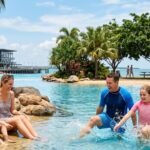
If you are travelling with children who love rockpooling, Stingray Bay is the most rewarding spot in Warrnambool and one of those places that locals quietly treasure while visitors often overlook. This sheltered cove sits at the mouth of the Merri River, protected from the Southern Ocean swell by the Warrnambool Breakwater, and at low tide the rock platforms reveal a teeming underwater world of crabs, anemones, sea stars, small fish and the occasional octopus.
Equip children with a magnifying glass, a pair of old sneakers for the rocks and low expectations — the discoveries will exceed them. The water in the pools is remarkably clear and calm compared to the open beaches, making it suitable for younger children who want to wade without the risk of being knocked over by a wave.
The Breakwater itself is a worthwhile walk in its own right. The stone and concrete wall stretches out into Lady Bay, and the views back towards Warrnambool from the end are genuinely lovely — the kind of perspective on a coastal city that you do not get from the foreshore. Walking the Breakwater takes around 20 minutes each way and is comfortable for most children from about four years of age, though the surface is uneven in places so appropriate footwear matters.
Practical details: Access to Stingray Bay and the Breakwater is free. Located near the Warrnambool Harbour on Breakwater Road. Check tide times before visiting for rockpooling — low tide is essential.
8. Warrnambool Botanic Gardens — A Hidden Green Oasis
In the middle of Warrnambool, a garden of surprising beauty and genuine historic significance sits quietly waiting to be discovered by families who wander away from the main tourist trail. The Warrnambool Botanic Gardens, established in the 1870s, cover twenty acres of beautifully maintained parkland that includes some of the region’s largest and most significant trees, sweeping lawns, a fernery, a rotunda, a historic sundial, a formal fountain and a small ornamental lake crossed by a charming footbridge.
Children who have spent the morning tearing around the Lake Pertobe playground often find the Botanic Gardens a genuinely restorative change of pace. The towering heritage trees create natural shade on hot days. The grass is immaculate and flat enough for a proper game of backyard cricket or a lazy picnic. A nature-based play space within the gardens gives younger children something specific to engage with while older family members explore.
The bat colony: One of the Botanic Gardens’ most memorable features is its resident grey-headed flying fox colony. Thousands of large fruit bats roost in the upper canopy, and their presence — noisy, odorous and genuinely spectacular — takes most visitors by surprise. Children are universally fascinated. For families visiting in the warmer months, the evening departure of the bats from the garden is one of Warrnambool’s most underrated natural spectacles.
Practical details: Warrnambool Botanic Gardens, 24 Bromfield Street. Free entry, open daily during daylight hours. Public toilets available within the fenced garden area.
9. Warrnambool’s Beaches — Where to Swim, Surf and Play
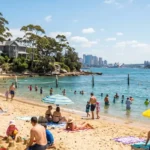
Warrnambool is blessed with multiple beaches, each with its own character, and choosing the right one for your family requires a little local knowledge. Lady Bay is the broad, sheltered arc of coastline that curves through central Warrnambool, and it encompasses several distinct beach sections that suit different ages and purposes.
Logans Beach
Wide, gently sloping and sheltered compared to the more exposed ocean beaches, Logans Beach is the go-to summer swimming spot for families with young children. The water enters gradually without steep drop-offs close to shore. The beach is patrolled by surf lifesavers during summer months. Parking is free and plentiful, and the beach is large enough that even during the peak of the summer school holidays it never feels genuinely crowded.
Shelly Beach
A smaller, more protected beach tucked inside the harbour entrance, Shelly Beach is a favourite with local families who have toddlers. The water is exceptionally calm — barely a ripple on most days — and the sandy bottom makes wading safe and comfortable for the very youngest children. The beach is backed by a grassed foreshore area with benches and shade.
Levy Beach
For families with older children and teenagers who are comfortable in surf, Levy Beach offers a more exposed ocean experience along the southern foreshore. The surf here is consistent and popular with local surfers. Swimming is best left to confident ocean swimmers, but the beach itself is beautiful and the walking track along the clifftops above it provides excellent views for non-swimmers.
The Foreshore Promenade
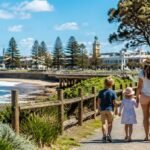
Connecting several of the beaches is the Warrnambool Foreshore Promenade — a sealed, flat pathway that runs along the Lady Bay shoreline and links the town centre with the breakwater precinct. Families use it for walking, cycling and riding scooters. A modern foreshore playground sits at one end, offering a different play experience from Lake Pertobe that is handy when you are already at the beach. The promenade is the perfect way to end a beach day — a slow walk back as the sun drops towards the horizon.
10. Warrnambool Art Gallery — Where Art Meets History for Families
Warrnambool Art Gallery is one of regional Victoria’s oldest and most respected cultural institutions, housing more than five thousand works across its diverse collection. For families, this is genuinely worthwhile on a rainy day — but also on a sunny one, because the gallery’s connections to the broader Warrnambool story give context to everything else you will see in the region.
The Eugene von Guerard painting of Tower Hill — dating from 1855 — is the gallery’s most historically significant work. Seeing the painting and then visiting Tower Hill itself makes both experiences richer. The gallery also holds a strong collection of European salon and colonial paintings from the 1800s alongside Indigenous artefacts and modernist pieces. Entry is free, making it one of Warrnambool’s most accessible cultural experiences.
The Warrnibald Show, which typically runs from late July through September, is a portrait exhibition celebrating local Warrnambool people and their stories. It is accessible, relatable and particularly engaging for children who connect more readily with pictures of real people than with abstract art. Check the gallery’s current exhibition program before visiting.
11. Allansford Cheeseworld — A Surprisingly Engaging Dairy Experience
About twelve kilometres east of Warrnambool on the Princes Highway, the small town of Allansford is home to Cheeseworld — a dairy attraction that sounds niche but consistently surprises families who stop in. The combination of free entry, cheese tastings, interactive displays about the local dairy industry and a well-stocked deli counter makes it a genuinely worthwhile half-hour detour.
The South West of Victoria is serious dairy country, and Allansford Cheeseworld gives children a real understanding of where Australian cheese comes from and how it is made. The tasting counter is a highlight for adults and curious kids alike. The shop stocks regional produce, dairy goods and local preserves that make excellent picnic provisions for the rest of your Warrnambool trip.
12. The Middle Island Maremma Project — Warrnambool’s Most Famous Story
Middle Island sits just offshore from Warrnambool and is home to one of the most charming wildlife conservation stories in Australia. The island’s Little Penguin colony was facing extinction due to fox predation until a local chicken farmer named Allan Marsh suggested training Maremma Sheepdogs to live on the island and guard the penguins. The project worked, the penguin numbers recovered, and the story became famous enough to inspire the 2015 Australian family film Oddball.
Middle Island is not strictly open to casual visitors, but families who watch Oddball before or after their Warrnambool trip will find the connection to this specific place genuinely exciting for children. The film is heartwarming, funny and entirely appropriate for family viewing. The story of the Maremma dogs and the penguins is now woven into Warrnambool’s identity.
Warrnambool City Council does organise occasional guided tours to Middle Island during the penguin season, so checking the council website or the Flagstaff Hill visitor information centre for current tour availability is worthwhile.
13. Mini Golf by the Sea — Classic Family Fun
Sometimes families just want something simple and reliably enjoyable, and Warrnambool’s Mini Golf by the Sea delivers that without pretension. Located near the foreshore with sea views, the course is well-maintained and challenging enough to keep older children genuinely competitive. Younger children enjoy the novelty of it without being frustrated by the difficulty. It is the kind of activity that fills a couple of hours pleasantly when weather prevents beach visits or the children need a gentle wind-down activity before dinner.
14. Thunder Point Coastal Reserve — Clifftop Views Worth the Walk
For families with children aged eight and above who enjoy a walk with dramatic scenery at the end, Thunder Point Coastal Reserve on the southern edge of Warrnambool delivers clifftop views of the Southern Ocean that are nothing short of breathtaking. The basalt columns and rock platforms below the cliff edge are a geological continuation of the same volcanic story told at Tower Hill, and the context makes the landscape feel layered with meaning.
The walk around Thunder Point is relatively short — under two kilometres for the main loop — but the terrain is uneven in sections so appropriate footwear matters. The views out to sea are expansive, and on clear days the horizon stretches south towards Antarctica with nothing in between. Children who have visited the whale watching platform at Logans Beach will quickly understand why Southern Right Whales choose these waters.
15. Lighthouse Theatre — Cultural Evenings for Families
Warrnambool’s Lighthouse Theatre is the city’s primary performing arts venue and regularly hosts family-friendly productions, children’s shows and community events. For families staying in Warrnambool for more than two nights, an evening at the Lighthouse Theatre adds a cultural dimension to the trip that children often appreciate more than their parents expect.
Check the theatre’s current season before visiting. Children’s shows, school holiday performances and family-rated productions are typically listed well in advance on the theatre website. The venue is well-designed for families, with accessible seating and facilities, and the quality of programming from touring companies is consistently high.
When to Visit Warrnambool with Kids — A Seasonal Guide
Warrnambool is worth visiting in every season, but different experiences peak at different times of year. Use this guide to match your visit to what matters most to your family.
| Summer (Dec–Feb) | Autumn (Mar–May) | Winter (Jun–Aug) | Spring (Sep–Nov) |
| Beaches, swimming, picnics at Pertobe | Bushwalking, Botanic Gardens, wildlife spotting | Whale watching at Logans Beach | Wildflowers, Tower Hill walks, whale season starts |
| Foreshore Promenade walks | Allansford Cheeseworld, indoor days | Deep Blue Hot Springs, Flagstaff Hill show | Rock pooling at Stingray Bay |
Summer in Warrnambool is classic Victorian coastal holiday territory — long evenings, warm water and the foreshore buzzing with families. Winter brings the whale season and the particular joy of watching enormous marine mammals from a free clifftop platform in the cold sea air. Autumn and spring are underrated shoulder-season periods when accommodation prices drop, crowds thin out significantly and the wildlife at Tower Hill is often more active.
Practical Planning Guide for Families
Getting to Warrnambool
Warrnambool is accessible by car from Melbourne via the Princes Highway (approximately two hours 45 minutes to three hours depending on traffic) or via the Great Ocean Road itself, which takes considerably longer but is one of Australia’s great scenic drives. V/Line operates regular train services from Melbourne Southern Cross Station to Warrnambool, with the journey taking approximately three hours. A direct flight from Melbourne to Warrnambool Airport is also available, though schedules are limited.
Getting Around Warrnambool with Kids
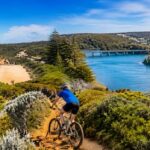
Most of Warrnambool’s family attractions are accessible by car, but the city is also genuinely bicycle-friendly. Families who travel with bikes will find that the foreshore promenade, the Lake Pertobe precinct and several parks can be connected by flat, sealed bike paths. The city centre is compact and walkable once you are parked. A hire car or your own vehicle is essential for reaching Tower Hill and Allansford.
Where to Stay in Warrnambool with Kids
Warrnambool has a solid range of family-friendly accommodation options spanning holiday parks, self-contained apartments, motels and boutique hotels. Holiday parks near the foreshore offer the convenience of bike hire, communal facilities and affordable pricing that makes longer stays viable. Self-contained apartments with kitchen facilities are particularly popular with families because they reduce dining-out costs over multi-night stays. The Deep Blue Hotel is the premium option for families who want to build their stay around the hot springs experience.
Eating Out with Kids in Warrnambool
Warrnambool has a food scene that punches above its regional weight. The main commercial strip along Liebig Street and the Timor Street precinct both offer a range of cafes, restaurants and takeaway options that cater to families. Fairy Floss — a famous local fish and chip shop — is an institution among visiting families. Several cafes near the foreshore offer alfresco seating that works well for families who want to watch the children play nearby while adults enjoy a proper coffee. For budget-conscious families, the free BBQ facilities at Lake Pertobe and the Botanic Gardens make self-catering a perfectly enjoyable option.
What to Pack
Weather in Warrnambool can shift rapidly at any time of year. Even in summer, evenings along the foreshore are cool and a warm layer is useful. For any winter visit, proper warm and waterproof clothing for the whole family is non-negotiable — you will regret the whale watching experience if everyone is shivering. Old sneakers or water shoes are recommended for Stingray Bay rockpooling. Sunscreen is important year-round given Victoria’s UV levels.
Read: Olds Park PenshurstFrequently Asked Questions About Warrnambool with Kids
What is the best time of year to visit Warrnambool with kids?
Warrnambool is a genuine year-round destination. Summer (December to February) is ideal for beach activities and long outdoor days. Winter (June to August) is the best time for whale watching at Logans Beach. Spring and autumn offer quieter conditions with milder weather and excellent wildlife spotting at Tower Hill. School holiday periods in January and July are the busiest times.
How many days do you need in Warrnambool with kids?
A minimum of two nights is needed to scratch the surface. Three nights allows you to properly cover the key attractions without feeling rushed. Four to five nights is ideal if your family enjoys lingering in places rather than ticking boxes. A week or more is entirely justified if you want to combine Warrnambool with day trips to Port Fairy, the Twelve Apostles and the Grampians.
Is Warrnambool expensive for families?
Warrnambool is one of the more affordable major coastal destinations in Victoria. The majority of the city’s most compelling family experiences are completely free — Lake Pertobe, Logans Beach whale watching, Tower Hill Wildlife Reserve, the Botanic Gardens, the beaches and the Breakwater all cost nothing. Paid experiences like Flagstaff Hill, Deep Blue Hot Springs and Warrnambool Wildlife Encounters add cost but are genuinely worth the investment. A family can have an extraordinarily rich two-day experience here on a very modest budget.
What is there to do in Warrnambool in winter with kids?
Winter is actually a magnificent time to visit Warrnambool with children. Whale watching at Logans Beach is the headline experience and one of the most powerful wildlife encounters in Australia. The Deep Blue Hot Springs are deeply enjoyable on cold days. Flagstaff Hill is engaging in any weather, and the Sound and Light Show takes on particular atmosphere during winter evenings. Tower Hill often has more wildlife activity in cooler weather. Warrnambool in winter is genuinely underrated.
Are there free things to do in Warrnambool with kids?
Absolutely. Lake Pertobe Adventure Playground, Logans Beach, Tower Hill Wildlife Reserve, the Warrnambool Botanic Gardens, the Foreshore Promenade, the Breakwater, Stingray Bay rockpooling, the Warrnambool Art Gallery and all of the city’s beaches are completely free to access. A family can fill two or three days in Warrnambool without spending a dollar on attractions.
How far is Warrnambool from Melbourne?
Warrnambool is approximately 265 kilometres from Melbourne. Via the Princes Highway, the drive takes around two hours and 45 minutes under normal conditions. Via the Great Ocean Road, the scenic coastal route takes considerably longer — usually five to six hours depending on how many stops you make — but is one of the great Australian road trip experiences and entirely worthwhile with children.
What is Warrnambool famous for?
Warrnambool is famous for its Southern Right Whale nursery at Logans Beach, the Flagstaff Hill Maritime Village and its extraordinary shipwreck collection, the Great Ocean Road connection, the Lake Pertobe Adventure Playground, and the story of the Maremma dogs and penguins of Middle Island. It is also known as the largest regional city on Victoria’s Shipwreck Coast and as a thriving food, arts and cultural hub for the South West Victoria region.
Can you see whales from shore in Warrnambool?
Yes, and the Logans Beach Whale Watching Platform is one of the best land-based whale watching sites in Australia. Southern Right Whales come remarkably close to shore and are visible with the naked eye from the elevated viewing platform. Binoculars are helpful but not essential. The whales are present from approximately late May through to early October each year, with July and August typically the most active period.
What is the Middle Island Maremma Project?
The Middle Island Maremma Project is a conservation program in which Maremma Sheepdogs have been trained to protect Warrnambool’s Little Penguin colony from foxes. The project became famous after it was depicted in the 2015 Australian family film Oddball. The penguin colony, which had dropped to critically low numbers due to fox predation, recovered significantly following the introduction of the guardian dogs. It is one of Australia’s most celebrated and heartwarming conservation stories.
Is Tower Hill worth visiting?
Tower Hill Wildlife Reserve is absolutely worth visiting and is one of the most underappreciated wildlife experiences in Victoria. The combination of free entry, accessible walking trails, genuinely wild native animals visible in their natural habitat and the extraordinary volcanic landscape makes it exceptional value. The optional guided cultural tour with Worn Gundidj Aboriginal Cooperative adds significant depth to the experience for families who want to engage with the deeper story of this landscape.
Day Trips from Warrnambool Worth Adding to Your Itinerary
Warrnambool sits within easy reach of several other outstanding family destinations that can add dimension to a longer trip through South West Victoria.
Port Fairy (28km west): One of Australia’s best-preserved 19th-century fishing villages, Port Fairy has an extraordinary collection of historic bluestone and sandstone buildings, beautiful beaches, Griffiths Island and its lighthouse, a relaxed cafe culture and the famous Griffiths Island walking loop which offers penguin and shearwater sightings at dusk. It is a perfect half-day from Warrnambool.
The Twelve Apostles (90km east): The most visited section of the Great Ocean Road, the Twelve Apostles limestone stacks are worth visiting despite the crowds. Go early morning for the best light and thinner visitor numbers. The helicopter flights from nearby Princetown are a genuine wow factor for children — expensive, but memorable.
The Grampians (150km north-east): The Gariwerd/Grampians National Park is a two-hour drive from Warrnambool and offers bushwalking, Aboriginal rock art, kangaroos at Halls Gap and the spectacular Mackenzie Falls. It is an entirely different landscape to the coast and a wonderful counterpoint on a longer South West Victoria loop.
Final Thoughts: Why Warrnambool Belongs on Your Family Travel List
Warrnambool does not need to shout. It does not need gimmicks or manufactured experiences to impress visiting families. The city’s natural assets — one of the most accessible whale nurseries in the Southern Hemisphere, a prehistoric volcanic landscape teeming with native wildlife, spectacular coastline, free world-class playgrounds and two centuries of maritime history — do the work without any commercial packaging.
What makes Warrnambool special for families is the combination of scale and accessibility. This is a real city with proper infrastructure — good cafes, reliable accommodation, excellent facilities at every attraction — but it never loses sight of the coast, the wildlife and the land. Children leave with stories about whales and koalas and a living volcano. Parents leave with the satisfaction of having shown their family something genuinely extraordinary without spending a fortune.
Warrnambool is one of regional Victoria’s finest family destinations. Plan a proper visit. Give it the time it deserves. You will not be disappointed.
Disclaimer: Attraction details, prices, operating hours and seasonal availability can change. Always verify current information directly with each attraction before visiting. Some experiences require advance booking, particularly during school holiday periods.