Monbulk sits in the green folds of the Dandenong Ranges, a short drive east of Melbourne but a world away from the city in feel. Visitors often arrive expecting a quick stopover between the more heavily promoted hill towns, and end up staying far longer than planned. The town has a working, lived in character that comes from more than a century of market gardening, flower growing and small town community life, and that character is what sets it apart from some of its more polished neighbours.
This guide pulls together practical, on the ground information for anyone planning a visit to Monbulk, whether that is a day trip from Melbourne, a stop on a longer Dandenong Ranges itinerary, or a scouting trip before a move to the area.
Where Is Monbulk And How Do You Get There
Monbulk is located in the Shire of Yarra Ranges, roughly 42 kilometres east of the Melbourne CBD. The drive typically takes around an hour, depending on traffic through the outer eastern suburbs, and the route climbs steadily as it enters the Dandenong Ranges, with the temperature noticeably dropping the higher you go.
There is no train station in Monbulk itself. The closest rail connection is Belgrave, which sits on the Belgrave line from Melbourne’s metro network and is also the starting point for the Puffing Billy steam railway. From Belgrave, it is a short drive along Monbulk Road into town. Public bus routes connect Monbulk with Belgrave and surrounding towns, though a car remains the easiest way to explore the wider Dandenong Ranges given how spread out the attractions are.
For anyone driving up from Melbourne, the Burwood Highway or Mount Dandenong Tourist Road are the two main approaches, both offering glimpses of the forested hills before you reach town.
A Town Built On Farms, Flowers And A Jam Factory
Long before European settlers arrived, the area belonged to the Wurundjeri people, and the name Monbulk comes from their word Monbolok or Monbolac, generally translated as hiding place in the hill. That description still feels accurate. Tucked into a fold of the ranges and surrounded by tall forest, the town has a slightly sheltered, secluded feel even now.
European settlement began in earnest in the late eighteen hundreds, when the government established the Dandenong Forest Village Settlement, carving the district into dozens of small farming blocks of around ten acres each. Families cleared land, planted orchards and vegetable gardens, and discovered that the cool climate and rich volcanic soil were ideally suited to growing berries, stone fruit and, later, cut flowers. A local fruit growers cooperative formed early on, and a jam factory opened not long after, turning Monbulk grown berries into a product that ended up on breakfast tables across the country for decades.
That agricultural backbone never really disappeared. Drive through Monbulk today and you will still pass market gardens, flower farms and plant nurseries, many run by families who have worked the same land for generations. The town became one of Victoria’s most significant flower growing districts during the twentieth century, and it remains a major supplier of cut flowers, foliage and nursery stock to the greater Melbourne market.
Things To Do In And Around Monbulk
Walking And Hiking Trails
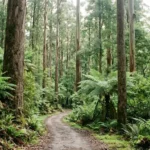
Monbulk works well as a starting point for several walks that showcase the mix of farmland and forest the area is known for. Baynes Park has a looped trail following Sassafras Creek before continuing through to Ferny Creek, passing through the kind of fern lined gully scenery the Dandenong Ranges are famous for. Kays Picnic Ground, just off Monbulk Road, is the starting point for a shorter out and back walk alongside the creek that suits families or anyone after a gentler stroll.
For a longer outing, a trail links Monbulk to Belgrave via the Coles Ridge Track, dropping down through the northern section of Dandenong Ranges National Park. It is a good option if you want to experience the national park’s tall eucalypt forest without needing a car at both ends, since it finishes near Belgrave station.
The Sassafras Creek Nature Conservation Reserve, reached from Moxhams Road, offers another short walk through dense fern gullies typical of this part of the ranges, and it is a handy option if you only have a spare half hour.
Cycling The Wall
Serious cyclists know Monbulk for one climb in particular, a road route often called The Wall, connecting Monbulk to Olinda over roughly five kilometres. The climb has earned its nickname from two especially steep pinches, including a demanding stretch partway up with a gradient that catches out riders who have not tackled it before. It has become something of a local test piece, and on weekends you will often spot cyclists grinding their way up in low gears. The route passes near Cloudehill Gardens and the R.J. Hamer Arboretum, both worth a stop if you are not in too much of a hurry to finish the ride.
Silvan Reservoir Park
A short drive from Monbulk, Silvan Reservoir Park makes a pleasant detour for a picnic. The park combines formal European style gardens, established decades ago, with surrounding native eucalypt forest, and features stone terraces, a vine covered pergola and colourful displays of azaleas and rhododendrons depending on the season. Free barbecue facilities and children’s play equipment make it a solid choice for a family stop.
Puffing Billy And The Monbulk Creek Trestle
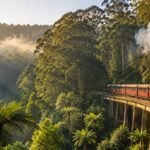
While the Puffing Billy steam railway is based out of Belgrave, part of its historic route crosses the Monbulk Creek trestle bridge, linking the town’s landscape directly to one of Victoria’s best known tourist experiences. Rail enthusiasts and families often combine a Puffing Billy trip with a drive through Monbulk to see more of the surrounding countryside the train passes through.
Farm Gates, Nurseries And Local Markets
Given its horticultural history, browsing local nurseries and farm gates is one of the more distinctive things to do around Monbulk. Several nurseries in the area sell native plants, seasonal flowers and garden supplies direct to the public, and it is common to see roadside stalls selling produce grown just metres away. Local markets pop up periodically, offering fresh flowers, seasonal fruit and vegetables, and handmade goods from residents and small producers based in the district.
Exploring The Wider Dandenong Ranges
Monbulk’s real advantage is its location. Within a five to ten minute drive you can reach Olinda, Kalista and Sassafras, three villages known for cafes, antique shops and boutique stores lining their main streets. Slightly further afield, Dandenong Ranges National Park covers several distinct sections, including Sherbrooke, Ferntree Gully, Olinda and Doongalla, each with its own network of walking trails through mountain ash forest, some of the tallest flowering trees on earth. The Dandenong Ranges Botanic Garden, formerly known as the National Rhododendron Garden, is also within easy reach and is worth timing your visit around if you enjoy formal gardens in bloom.
Local Community And Events
Despite its small population, Monbulk maintains an active community life built around sporting clubs, a primary school with roots going back to the same era as the jam factory, and regular local events. Community halls host everything from craft markets to fundraising dinners, and the surrounding farms often open their gates for seasonal events tied to flower and produce harvests. This is not a town built around tourism infrastructure, and that is reflected in the pace of daily life. Shops close earlier than you might expect compared to a city strip, and weekends tend to be genuinely quiet outside of market days.
When To Visit
Because so much of the appeal here revolves around gardens, forest walks and farm produce, the time of year genuinely changes the experience.
Spring brings flowering bulbs, blossom and the first stone fruit crops, and it is arguably the most photogenic season in the wider ranges. Summer is often cooler than Melbourne thanks to the elevation, making it a popular escape from city heat, though bushfire risk means it is worth checking total fire ban conditions before heading into forested areas. Autumn turns many of the introduced trees around Monbulk and its neighbouring towns shades of red and gold, particularly in gardens planted with European species. Winter is quieter and noticeably cooler and wetter, but the forest walks take on a moodier, misty character that some visitors prefer, and it is a good time to visit indoor attractions like local cafes and galleries without the crowds.
Where To Eat And Stay
Monbulk itself has a small but solid selection of cafes and bakeries along its main street, generally geared toward locals and passing visitors rather than tourist crowds, which keeps prices reasonable. For a wider choice of dining, the short drive to Olinda or Sassafras opens up more options, including several long running cafes known for Devonshire tea and hearty breakfasts.
Accommodation directly in Monbulk tends toward bed and breakfasts and self contained cottages rather than large hotels, reflecting the town’s rural character. Visitors after more variety usually base themselves in Belgrave, Olinda or further toward Healesville, then use Monbulk as one stop among several on a Dandenong Ranges day trip.
Practical Tips For Your Visit
A few things are worth knowing before you set off. Mobile phone reception can be patchy in parts of the ranges, particularly once you are on walking trails away from the main roads, so it is worth downloading maps in advance. Roads through the hills are narrow and winding in places, with plenty of cyclists sharing the tarmac, so a bit of extra caution driving through town and along routes like The Wall goes a long way. Weather can shift quickly at this elevation, a warm morning in Melbourne does not guarantee the same conditions once you have climbed into the ranges, so packing a layer is generally a good idea regardless of season. Parking in Monbulk itself is straightforward and free along the main street, which is a point of difference from busier villages like Olinda, where spaces can be harder to find on weekends.
Final Thoughts
Monbulk rewards visitors who are happy to slow down. It does not have the postcard fame of some Dandenong Ranges villages, but that is largely the point. Between the forest walks, the flower farms, the cycling routes and the genuine small town feel of the main street, it offers a version of the ranges that feels closer to how the district has always worked, rather than a version built purely for day trippers. Whether you are stopping for an hour on the way to Puffing Billy or spending a full day exploring farm gates and walking trails, Monbulk is easy to fit into a Dandenong Ranges itinerary and worth the detour on its own.
Quick Facts About Monbulk
| Detail | Information |
| Location | Shire of Yarra Ranges, Victoria |
| Distance from Melbourne CBD | Approximately 42 kilometres east |
| Population | 3,651 residents (2021 census) |
| Name origin | Aboriginal word Monbolok / Monbolac, meaning “hiding place in the hill” |
| Known for | Flower growing, market gardens, plant nurseries |
| Nearby villages | Kalista, Olinda, Sassafras |
| Nearest train station | Belgrave |
| Key natural attraction | Dandenong Ranges National Park |
| Popular cycling route | The Wall (Monbulk to Olinda) |
Frequently Asked Questions
Is Monbulk worth visiting?
Yes, particularly if you enjoy a quieter, more local alternative to the busier Dandenong Ranges villages. It offers genuine farm gate shopping, forest walks and a strong connection to the region’s flower growing history, without the tourist crowds found in some neighbouring towns.
How far is Monbulk from Melbourne?
Monbulk is around 42 kilometres east of the Melbourne CBD, with the drive generally taking about an hour depending on traffic and the route taken through the outer eastern suburbs.
Does Monbulk have a train station?
No. The nearest station is Belgrave, which connects to Melbourne’s metro rail network and is also the starting point for the Puffing Billy steam railway. From there, it is a short drive to Monbulk.
What is Monbulk known for?
Monbulk is best known for its flower and nursery industry, market gardens and its history as a fruit growing and jam producing district. It sits within the Dandenong Ranges and shares the region’s forest walks, gardens and scenic drives.
What does the name Monbulk mean?
The name comes from the Aboriginal word Monbolok or Monbolac, generally translated as hiding place in the hill, reflecting the town’s sheltered position within a fold of the Dandenong Ranges.
Can you walk from Monbulk to Belgrave?
Yes. A walking trail links Monbulk to Belgrave via the Coles Ridge Track, passing through part of Dandenong Ranges National Park along the way.
Is Monbulk a good base for exploring the Dandenong Ranges?
It can be, especially if you prefer a quieter town with easy access to Olinda, Kalista and Sassafras, all within a five to ten minute drive, along with the national park and botanic gardens nearby.