From Sydney, Melbourne, Brisbane, and Perth, Filipino dessert cafés and bakeries as well as home-based dessert ventures are hands on introducing different and exciting tropical, colorful, and comforting sweet treats, which are all rooted and inspired by traditions, to all Australians.
Filipino desserts are built from ingredients such as rice, coconut, tropical fruits, purple yam, cassava, and dairy. These ingredients have roots from influences and ingredients from centuries of cultural exchange which have found their way to the Philippines. This is in contrast to many Western desserts that build from an influence of chocolate, buttercream, and baked pastries. The diversity of ingredients also results in a dessert culture that is new, yet familiar to the Australian taste.
This guide looks at the most popular and the most loved dessert in Australia. It also provides a background on the ingredient and culture of dessert and provides insights as to why desserts are gaining popularity in Australia and where they can be found among the Filipino communities in Australia.
Reasons for the Increasing Popularity of Filipino Desserts in Australia
While the influence of international food cultures on Australian cuisine has been well documented, the rise in popularity of Filipino desserts in the last decade is more specific and pote ntially the result of a few factors.
1. Big Filipino Community in Australia
With the increasing population of Filipinos in Australia came the growing number of bakeries, restaurants, and home-based dessert businesses, especially in metropolitan areas. These established communities have introduced their native desserts to the greater Australian community.
2. Distinct Taste
Desserts from the Philippines are not bland and overly sweet as many people would assume. Filipinos prefer to combine the sweetness of fruits and coconuts, and cream with rice and other ingredients and to serve them chilled. Australians, along with the dessert-eating communities, prefer flavor over sweetness.
3. Color and Design
Desserts from the Philippines incorporate a wide variety of colorful ingredients layered on top of other ingredients. Presenting a colorful dish reminds dessert-eating communities of the recently growing modern dessert and café culture.
4. Social Networking and Marketing
Philippine culture introduced innovative and colorful desserts (like Halo-halo and Ube cheesecakes) which are easily shared on a variety of online platforms. The incorporation of these innovations to Australia’s urban food culture is especially apparent.
5. Immigrant Mixed Desserts
Philippine and Western baking techniques have been combined at Australian dessert shops across the country. It is common to find a dessert shop with a Ube cake, a Leche flan cheesecake, or a Pandasal ice cream sandwich.
Most Popular Filipino Desserts in Australia
Below is a detailed guide to the most loved Filipino desserts that are commonly found in Australia today.
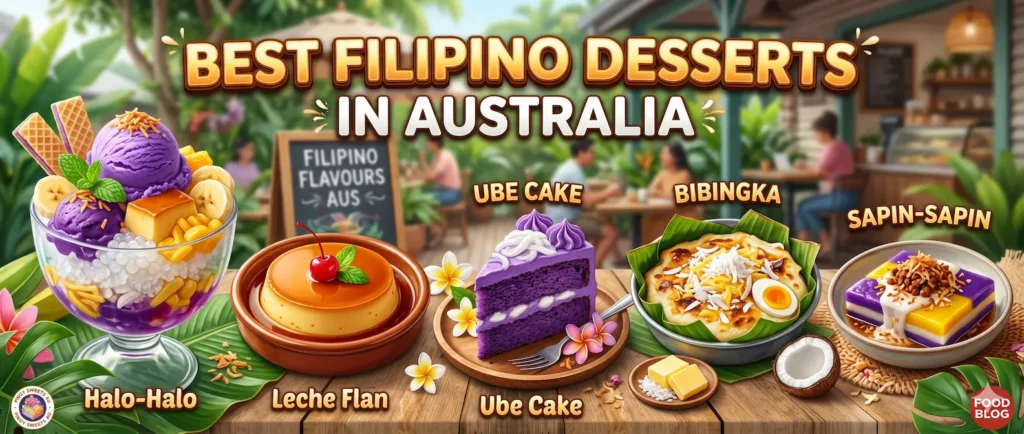
1. Halo-Halo: A Cozy Taste of Filipino Culture
Considered to be the most iconic dessert of the Philippines, halo-halo is a beautiful layered dessert served in a tall glass or bowl and can also be one of the most visually striking desserts available in Australia.
Crushed ice layered with evaporated milk and sweetened with ingredients such as:
- Sweetened beans,
- Coconut strips,
- Jackfruit,
- Jelly cubes,
- Leche flan,
- Purple yam (ube),
- Rice crisps or puffed rice.
“Mix-mix” is the direct translation of halo-halo. That is, when served, consumers must mix the components of the dessert to combine the multitude of flavors and textures from creamy and icy to fruity and chewy.
In Australia, especially in warmer months, you can find halo-halo at Filipino dessert cafes and pop-ups during the summer.
2. Ube Desserts: The Obsession with Purple Yam
Especially in Australia, ube (purple yam) is one of the most notable modern Filipino dessert ingredients. Given its naturally sweet, nutty flavor and its eye-catching purple shade, it can mix into cakes, pastries, and ice cream.
Ube desserts we may know are:
- Ube cake
- Ube ice cream
- Ube halaya (sweet purple yam jam)
- Ube cheesecake
- Ube pandesal (sweet bread rolls)
Bringing together cultures through desserts and pastries has been growing across Australia, and Sophie and I have been lucky enough to enjoy it too.
Ube desserts are available in many of the modern bakeries in Sydney and Melbourne.
The best descriptions of the flavor are subtle with vanilla, coconut, and white chocolate.
3. Leche Flan: The Filipino Caramel Custard
Leche flan is a dessert enjoyed by any custard lover. Though similar to the classic French crème caramel, leche flan is thicker and creamier.
Leche flan is composed of dense:
- Egg yolks
- Condensed milk
- Evaporated milk
- Sugar caramel topping
It is a staple at celebratory events like Christmas or birthdays and is common among family gatherings.
In Australia, leche flan is sold at Filipino bakeries. You can purchase the custard in single servings or as a large tray to share among family.
4. Bibingka: Traditional Rice Cake with a Modern Twist
Bibingka is a beloved Filipino dish that fuses elements of both rice and coconut. Traditionally, banana leaves are used to line the baking pot. Bibingka then bakes in its flavor locked in clay pots.
Bibingka can be topped in any variety of ways.
- Salted Eggs
- Grated Coconut
- Cheese
- A sprinkle of sugar and butter
Bibingka is baked in muffin tins in Australia, Modernizing the dish but retaining that delicious tasty texture.
During the Christmas season, bibingka is king and reigning through all the Filipino communities.
5. Puto: Soft Steamed Rice Cakes
Puto is a traditional rice cake from the Philippines. It’s a soft, fluffy dessert made with steamed rice flour and lightly sweetened.
Normally, Puto is topped with:
- Cheese
- Salted egg slices
- Coconut
It is often an accompaniment to savory dishes like stews, but in Australia, Puto can be eaten as a simple snack and even a light dessert.
Because of its simplicity, many Australians trying Filipino desserts for the first time often start with Puto.
6. Turon: Banana Spring Rolls
Turon is a deep-fried dessert made by wrapping banana slices and jackfruit in spring roll wrappers, then caramelising them with sugar during frying.
The result is:
- Crispy exterior
- Soft banana filling
- Caramelised sugar coating
Turon is widely sold in Filipino street food stalls and increasingly in Australian food markets and festivals.
It is one of the easiest Filipino desserts for Australians to enjoy due to its familiar banana flavour.
7. Cassava Cake: Dense and Chewy Coconut Dessert
Grated cassava (or yuca), coconut milk, condensed milk, and eggs are used to create cassava cake.
The texture is mainly dense with chewiness and topped with a creamy layer which is usually baked until golden.
Aside from traditional sponge cakes, dense and chewy cakes like cassava cakes are a texture variety Australians appreciate. Philippine gatherings and bakeries would usually offer cassava cakes to guests.
8. Mais Con Yelo: Sweet Corn Dessert
Mais con yelo is a classic, straightforward dessert that is made of:
- Sweet Corn Kernels
- Crushed Ice
- Milk
- Sugar
- With optional Ice Cream
It has a relatively simple recipe compared to halo-halo, but is a dessert that is still really popular during the hot summer months in Australia.
The dessert is a great light option with the combination of delicious, creamy milk and crushed, crunchy ice.
9. Buko Pandan: Coconut and Jelly Dessert
Buko pandan is a dessert consisting of:
- Young coconut strips
- Pandan jelly
- Sweet cream or condensed milk
- Tapioca pearls
It is creamy and a herbal scent emanates from the pandan leaves.
Buko pandan is often seen at buffets in Australian, particularly Filipino, homes.
10 Sapin-Sapin: Layered Rice Dessert
Sapin-sapin is a bright layered dessert made from rice flour, coconut milk, sugar.
Sometimes each layer has different flavours such as:
- Ube
- Coconut
- Jackfruit
Bright layers, soft chewy texture, and sliced to serve, sapin-sapin is also popular in Filipino bakeries in Australia.
11. Maja Blanca: Coconut Milk Pudding
Maja Blanca is a pudding made with coconut milk and cornstarch and can be topped with sweet corn or coconut flakes.
Smooth and mildly sweet, it is the perfect family gathering dessert.
Maja Blanca is found in pretty much every Filipino dessert tray and catering services.
Filipino Desserts in Australian Food Culture
Historically, Filipino desserts were served at communal events. Now, these desserts are showcased and recognized throughout Australia.
You can find these desserts in:
- Filipino baking shops.
- Dessert cafés.
- Food markets on Saturdays.
- Cultural festivals.
- Fusion dessert businesses.
- Home bakers selling online.
In the bigger cities, Australia has seen an increase and growth of Filipino desserts. This is shown in Sydney, Melbourne, Brisbane, and Perth.
Why Australians Love Filipino Desserts
Filipino sweets resonate with Australian consumers for several reasons:
- They offer new textures like chewy cassava and gelatin layers
- They use tropical flavours not commonly found in Western desserts
- They balance sweetness rather than overwhelming sugar content
- They are visually appealing and Instagram-friendly
- They provide cultural storytelling through food
FAQ: Filipino Desserts in Australia
What is the most popular Filipino dessert in Australia?
Halo-halo and ube-based desserts are currently the most popular Filipino sweets in Australia due to their unique flavour and visual appeal.
Are Filipino desserts very sweet?
Most Filipino desserts are moderately sweet compared to Western desserts. They often balance creaminess, coconut flavour, and natural sweetness.
Where can I buy Filipino desserts in Australia?
You can find them in Filipino bakeries, dessert cafés, weekend markets, and home-based baking businesses across major Australian cities.
What is ube and why is it popular?
Ube is a purple yam with a mildly sweet, nutty flavour. It is popular because of its vibrant colour and versatility in cakes, ice cream, and pastries.
Are Filipino desserts suitable for Australians who have never tried them before?
Yes, many Filipino desserts such as leche flan, turon, and ube cake are beginner-friendly and easy to enjoy.
Filipino Desserts in Australia: Regional Availability, Trends, and Cultural Growth
In Australia, you can find all kinds of Filipino desserts. Gone are the days when you could only find them in small, niche communities. Filipino desserts are now part of Australia’s local dining, especially in the urban areas where a mix of cultures is reflected in the food. The thriving community of bakers and café owners, along with Filipino desserts fusers and home-based entrepreneurs, provide and continue to expand their reach in offering sweets to the community.
This guide looks at Australian Filipino desserts, their cultural and economic trends, and the impact home-based businesses and modern fusion trends are leaving on Australian dessert culture.
Filipino Desserts Across Major Australian Cities
The variety of Filipino desserts is limited in some regions, however, wherever the multicultural food scene is most prominent, urban centers have seen a growing demand.
1. Sydney: The Leading Filipino Dessert Hub
Sydney hosts one of the most developed Filipino food scenes across Australia. Filipino desserts can be found in suburbs populated by a large Filipino community and inner city hip dessert cafés.
Common locations for availability of Filipino desserts include:
- Western Sydney suburbs like Blacktown
- The food precincts in Parramatta
- Fusion dessert cafés in the CBD
- Markets and stalls that operate on the weekend and pop up
Sydney stands out for its Ube desserts:
- Ube cheesecake slices
- Ube crinkle cookies
- Ube milk tea
- Halo-halo served in a dessert bowl at a café
Many of Sydney’s bakeries have come to provide a modern twist on Filipino desserts.
2. Melbourne: The Fusion Dessert Hub
Melbourne continues to enhance its reputation as the center for cutting-edge fusion desserts, making it a competitive city for Filipino desserts.
In Melbourne, Filipino desserts can be found in:
- Dessert cafés within the CBD and Carlton
- Asian fusion bakeries in Footscray
- Night markets that take place on the weekends
- Filipino specialty bakeries
Some of the popular items include:
- Ube Croissants
- Leche flan on cheesecake
- Pandan and coconut soft serve
- Halo-halo gel in jars
Melbourne’s café culture fosters and thrives on new ideas and this has made it easy for the Filipino dessert flavors to make their way into the other mainstream dessert offerings.
3. Brisbane: The Growth of Filipino Desserts
With the growth of the community and the expanding interest in Asian dishes, Brisbane’s Filipino dessert scene is growing.
Some examples are:
- Halo-halo in the summer season
- Bibingka and puto sold in bakeries
- Cassava cake and maja blanca sold in grocery stores
- Tray desserts sold by the home baker
Fusion desserts are starting to appear, and Brisbane is on the more traditional side of the desserts when compared to Sydney and Melbourne.
4. Perth: The Community and Dessert Culture
There is a smaller but more dynamic Filipino community in Perth that has a larger presence in traditional dessert promotion.
You can find Filipino desserts at:
- Cultural festivals and community activities
- Filipino-operated bakeries and kitchen stands
- Food fairs and gatherings outside of the church on the weekends
Some of the more popular desserts are:
- Spring rolls with bananas (Turon)
- Leche flan for gatherings
- Buko pandan
- Sapin-sapin
It is one of the more real examples of where you can find traditional Filipino desserts in Australia, and the connection is still there to the events and cultural celebrations happening around Perth.
The Rise of Filipino-Australian Home Baker Businesses
Australian popularity of Filipino desserts is attributed to Filipino home-based baking businesses.
These home-based baking businesses operate through:
Community
- Social media
- Weekend markets
- Internet orders
Why Home Bakeries Are Increasing
The popularity of home-based bakeries is increasing due to:
Low cost of starting a business
Filipino desserts contain ingredients like coconut milk and rice flour, and condensed milk which are easily accessible and affordable, therefore, easy to make from home.
Demand for desserts
Filipino desserts are related to special Filipino occasions like birthday, weddings, and family gathering etc, which require large catering dessert orders.
Community involvement
Filipino-Australian communities support their home businesses and help them grow with their networks.
Social media advertising
Desserts like ube cakes and halo-halo jars are alluring and popular on social media.
Common Products Sold by Home Bakers
Home-based dessert businesses typically specialise in:
- Ube cakes and cupcakes
- Leche flan trays
- Cassava cake slabs
- Buko pandan dessert tubs
- Custom halo-halo kits
- Party dessert boxes
These businesses have become essential in introducing Filipino flavours to Australians who may not visit traditional bakeries.
Modern Fusion Trends in Filipino Desserts
Due to the trends in fusion cuisine, rustic Filipino delicacies have sprung their own category in desserts. Combining traditional Filipino flavors and Western baking styles, Australian chefs and bakers have created a modern dessert that is unique to Filipino culture.
The Rise of Ube
Ube has officially gone global. Ube has now made its way into:
- Cheesecakes
- Donuts
- Macarons
- Milkshakes
- Pancakes and waffles
This beautiful purple ingredient can now be used beyond whimsical and creative visuals.
Halo-Halo Reinvented
Australian cafés are adapting halo-halo in the following ways:
- Halo-halo dessert jars to-go
- Bowl-style deconstructed halo-halo
- Halo-halo topped ice cream
- Halo-halo with fewer quality ingredients
These new adaptations attract customers who want modern plating and some simplification when it comes to flavors.
Pandan and Coconut in Fine Dining Desserts
Filipino flavours pandanan and coconut are increasingly being incorporated in popular high-end desserts, such as:
- Pandan panna cotta
- Coconut mousse cakes
- Coconut caramel tarts
- Pandan ice cream infused sandwiched
These ingredients are easy to integrate with Western dessert techniques while still preserving Filipino culture.
Cheesecake Fusion Expansion
Filipino cheesecakes are one of the leading fusion dessert variations in Australia.
Some of the popular varieties are:
- Ube cheesecake
- Mango graham cheesecake
- Leche flan cheesecake
- Buko pandan cheesecake
These incorporate Filipino flavors and offer a western dessert style.
Cultural Importance of Filipino Desserts in Australia
More than just providing taste, Filipino sweets connect cultural ties to family, heritage, and identity for Filipino Australians.
Birthday and Holiday Celebrations
Desserts play an important role in the
- Birthdays
- Weddings
- Holy Days
- Community events
Desserts are shared in packaging that serve a large group, which demonstrates a culture of hospitality.
Food as a Link to a Culture
Many Filipino-Australians use cuisine to stay connected to their heritage. Their traditional recipes are used and slightly changed at their core and customized to the local and seasonal ingredients.
Assimilation into Australian Food Identity
Filipino desserts, now available in the larger Australian marketplace, are now subset to the Australian food identity. Australian food culture has identified and accepted dishes and/or terms such as ube, halo-halo, and bibingka.
How to Choose Filipino Desserts in Australia
Those who aren’t familiar with Filipino sweets should base their first choice on flavor and texture.
For the newbies:
- Leche Flan (sleek and easy to recognize)
- Turon (crispy banana treat)
- Ube Cake (light and creamy)
For those not afraid to try:
- Halo Halo (multi-textured treat experience)
- Sapin-Sapin (layered rice treat)
- Buko Pandan (coconut jelly treat)
For those who love tropical flavors, try:
- Mango treats
- Coconut Puddings
- Cassava Cake
Filipino Dessert Pairing Ideas
Filipino desserts are usually eaten along with drinks or with meals.
Some of the popular pairings are:
- halo-halo with iced coffee
- leche flan with hot tea or espresso
- bibingka with hot chocolate
- ube cake with milk
having these foods together is complimenting both the tastes and flavors to fit the creamy and tropical tastes that most Filipino ingredients have.
Future of Filipino Desserts in Australia
Filipino desserts in Australia have a promising future. Here are some helpful trends:
- More diverse multicultural food culture
- More Filipino bakeries in subdivisions
- More ube and pandan in popular cafes
- More interest in pretty desserts
- Increase home businesses catering desserts
With the rise of the appreciation of global cuisine, the inclusion of Filipino desserts in Australian cuisine is inevitable.
Read Also: The Best Bakeries in MelbourneExtended FAQ
Why are Filipino desserts becoming so popular in Australia?
They combine unique tropical flavours, appealing textures, and strong visual presentation, making them attractive to both traditional and modern dessert consumers.
Are Filipino desserts available outside big cities?
Yes, while major cities have more options, suburban bakeries and home-based businesses also serve Filipino desserts across Australia.
What makes Filipino desserts different from Western desserts?
They often use ingredients like coconut, rice flour, cassava, and tropical fruits, resulting in lighter sweetness and more varied textures.
Is ube only used in desserts?
Primarily yes, ube is used in desserts, but it is also incorporated into drinks and baked goods in modern fusion cuisine.
Can Filipino desserts be customised for events?
Yes, many bakeries and home businesses in Australia offer customised dessert trays for birthdays, weddings, and celebrations.
Final Overview
Cultures and communities inevitably adapt to their surroundings, and the Filipino dessert community in Australia is no exception. Filipino desserts have become an integral part of Australia’s dessert culture. Halo-halo, ube cakes, cassava pudding, and leche flan are now found in bakeries and cafes across Australia. As this community grows, so will the dessert offerings and the opportunity to sample some of this culture.
Desserts are a delightful fusion of flavor. When woven together with different cultures, they are an innovative, contemporary expression of tradition. The spread of the Filipino dessert community across Australia has only just begun, and we are fortunate to be part of this tasty journey.

At OzKiwilife, Debashrita Majhi contributes fresh perspectives on lifestyle, technology, entertainment, and online culture. His writing style combines clarity, creativity, and real-world insights to connect with readers from different backgrounds. He is passionate about digital media, content marketing, and building valuable online resources that help people stay informed in a fast-changing world.