Gisborne sits on the eastern tip of New Zealand’s North Island, tucked into the curve of Poverty Bay where the Waimata, Taruheru and Turanganui rivers meet the Pacific Ocean. It holds a rare geographic distinction: because of its position close to the International Date Line, Gisborne is among the first cities on Earth to greet the sun each morning. That single fact shapes the whole personality of the place. Locals talk about sunrise the way other towns talk about sunset, and once you have watched the sky turn over Poverty Bay, you understand why.
Beyond the sunrise bragging rights, Gisborne, known to Maori as Turanga-nui-a-Kiwa and part of the wider Tairawhiti region, offers surf beaches within walking distance of the town centre, some of the country’s most awarded Chardonnay, a genuinely significant slice of New Zealand history, and outdoor adventures ranging from a natural five-storey waterslide to a century-old arboretum. It is also one of the more underrated destinations in the country, and Wikipedia’s overview of the city notes it as one of the smaller North Island centres, which is exactly why it never feels crowded even during peak season.
This guide walks through the top 10 things to do in Gisborne, drawing on current Google ratings, exact addresses and practical planning details, so you can build an itinerary that actually works whether you have a single afternoon or a full long weekend on the East Coast. A quick reference table, a ratings chart, a full FAQ section and some honest local tips are all included below.
Quick Reference: Top 10 Things to Do in Gisborne
Short on time? This table lays out every attraction covered in this guide alongside its current Google rating, address and who it suits best, so you can plan your route before reading the full write-up.
#
Attraction
Google Rating
Address
Best For
1
Wainui & Waikanae Beaches (Sunrise + Surf)
4.8
Waikanae Beach, Turanga-nui-a-Kiwa, Gisborne 4010
Sunrise, surfing, families
2
Titirangi (Kaiti Hill) Reserve
4.6
Titirangi Drive, Kaiti, Gisborne 4010
Views, walking, history
3
Dive Tatapouri Stingray Reef Tour
4.8
532 Whangara Road, Makorori 4073
Wildlife encounters
4
Tairawhiti Museum
4.6
10 Stout Street, Whataupoko, Gisborne 4010
Culture, rainy days
5
Rere Rockslide
4.7
Wharekopae Road, Rere 4072
Adventure, summer fun
6
Rere Falls
4.6
Wharekopae River, Rere 4072
Picnics, photography
7
Eastwoodhill Arboretum
4.7
2392 Wharekopae Road, Ngatapa 4072
Nature, autumn colour
8
Gisborne’s Wine Trail & Wine Centre
4.4
3/50 Esplanade, Inner Kaiti, Gisborne 4040
Wine lovers, couples
9
Sunshine Brewing Company
4.7
49 Awapuni Road, Awapuni, Gisborne 4010
Craft beer, casual dinner
10
Te Poho-o-Rawiri Marae
4.8
24 Ranfurly Street, Inner Kaiti, Gisborne 4010
Maori culture
1. Watch the Sunrise at Wainui and Waikanae Beaches
Address: Waikanae Beach, Turanga-nui-a-Kiwa, Gisborne 4010 | Current Google Rating: 4.8
There is no better way to start a Gisborne itinerary than with the thing the city is famous for. Waikanae Beach sits a short stroll from the town centre and combines a wide, patrolled swimming area with a boardwalk, playground and tennis courts, which makes it the easiest sunrise spot for visitors staying centrally. For a slightly wilder and more dramatic backdrop, drive out to Wainui Beach, a few minutes further along the coast, where the swell rolling in from the open Pacific makes for a genuinely striking sunrise silhouette.
Both beaches double as excellent surf spots later in the day. Waikanae and the nearby Roberts Road break are considered beginner-friendly, with a few local surf schools offering lessons, while Wainui and Makorori further along State Highway 35 attract more experienced surfers chasing consistent, powerful swell. Bring a coffee, get there before the sun clears the horizon, and expect the sky to do something worth photographing.
2. Climb Titirangi (Kaiti Hill) Reserve
Address: Titirangi Drive, Kaiti, Gisborne 4010 | Current Google Rating: 4.6
Titirangi, also known as Kaiti Hill, is the highest point overlooking the city and one of the most rewarding short walks in Gisborne. A one-way loop road climbs to the summit, shared with a dedicated cycling and walking path, and from the top you get a sweeping view across Poverty Bay, the port and the surrounding hills. There are several walking tracks branching off the main road for those who want a longer route, plus picnic areas and a small playground near the summit.
The reserve also holds real historical weight. Nearby, the Cook Landing Site National Historic Reserve on Kaiti Beach Road marks the spot where Lieutenant James Cook and the crew of the Endeavour first came ashore in New Zealand, and it now includes waka sculptures and a walkway that tell the story from a Maori perspective as well. Visiting both sites together turns a scenic lookout into a genuine history lesson, and it costs nothing beyond the petrol or the walk to get there.
3. Get Up Close with Stingrays at Dive Tatapouri
Address: 532 Whangara Road, State Highway 35, Tatapouri Beach, Makorori 4073 | Current Google Rating: 4.8
Dive Tatapouri runs one of the more unusual wildlife experiences in New Zealand. At low tide, guides lead small groups out onto a shallow reef in waterproof waders, where wild stingrays and eagle rays glide in close enough to touch and feed. It is a guided, closely supervised experience rather than a swim-with-stingrays free-for-all, and the guides spend as much time explaining the biology and behaviour of the animals as they do getting people into the water.
Because the tours are tied to the tide, timings shift from day to day, and spots fill quickly in the warmer months, so booking ahead is essential rather than optional. Dress for getting wet, bring a waterproof phone case if you want photos, and allow a full morning or afternoon once you include the drive out along the coast road, which is scenic in its own right.
4. Learn the Region’s Story at Tairawhiti Museum
Address: 10 Stout Street, Whataupoko, Gisborne 4010 | Current Google Rating: 4.6
Tairawhiti Museum is bigger than it looks from the outside, with rotating exhibitions covering local Maori history, early European settlement, the region’s art scene and the story of Gisborne as a port town. It is a genuinely good rainy-day option, and with an on-site cafe and gallery space, it is easy to lose an hour or two without noticing. The museum also runs an adjoining maritime section covering the region’s shipping and shipwreck history, which tends to surprise visitors who expect a small-town museum and get something far more substantial.
Entry is affordable and the layout is easy to navigate at your own pace, which makes it a solid stop for families, solo travellers filling in time before a flight, or anyone wanting context before visiting the Cook Landing Site or Titirangi later in the day.
5. Ride the Rere Rockslide
Address: Wharekopae Road, Rere 4072 | Current Google Rating: 4.7
Roughly 45 minutes inland from the city, the Rere Rockslide is one of the longest natural rock waterslides in the country, stretching around 60 metres down a smooth, sloped riverbed before dropping swimmers into a deep pool. Locals bring boogie boards, inflatable tubes or simply their togs and slide down on the current, and it is common to find spare floats left behind at the top for other visitors to borrow.
Conditions change with rainfall, so the slide can be faster or slower depending on when you visit, and the rock underfoot is genuinely slippery, so aqua shoes are worth packing. It is not a staffed or fenced attraction, so supervise children closely and use common sense around the current. Combine the visit with Rere Falls, just a short drive further up the same road, to make the most of the trip out.
6. Picnic at Rere Falls
Address: Wharekopae River, Rere 4072 | Current Google Rating: 4.6
Rere Falls is a wide, gentle curtain waterfall a short walk from a well-sized car park, making it one of the easiest natural attractions to reach in the whole region. Picnic tables sit close to the water, and on a warm day the pool at the base is a popular, relatively calm swimming spot compared with the rockslide further along the road.
The falls are at their most photogenic after a spell of rain, when the water runs fuller and wider, though the walk down can get muddy in those conditions. Pack a picnic, bring togs if the weather allows, and treat this as the relaxed counterpart to the adrenaline of the rockslide up the road.
7. Wander the Trails at Eastwoodhill Arboretum
Address: 2392 Wharekopae Road, Ngatapa 4072 | Current Google Rating: 4.7
Officially recognised as the National Arboretum of New Zealand, Eastwoodhill holds one of the largest collections of Northern Hemisphere trees anywhere in the Southern Hemisphere, planted over the past century across sweeping, rolling grounds. Several colour-coded walking trails cater to different fitness levels, from the easy Blue Walk to the far more demanding Yellow Walk, and a small on-site cafe makes it easy to turn the visit into a half-day outing.
Anyone who enjoys quiet nature walks and structured gardens elsewhere will find plenty to like here. If you have previously explored the tree-lined trails around the Yarra Valley, our guide to Healesville and the edge of the Yarra Valley covers a similarly green, slow-paced day trip, and it is worth a read for comparison if you are building out a wider Australia and New Zealand travel list. Bring layers, since the grounds sit slightly inland and can be noticeably cooler than the coast.
8. Taste Chardonnay on Gisborne’s Wine Trail
Address: Gisborne Wine Centre, 3/50 Esplanade, Inner Kaiti, Gisborne 4040 | Current Google Rating: 4.4
Gisborne is New Zealand’s third largest wine region and is best known internationally for its Chardonnay, though local producers also turn out well-regarded Gewurztraminer, Pinot Gris and Viognier. For visitors without a car or without time to chase down individual cellar doors, the Gisborne Wine Centre on the Esplanade pours a broad selection of regional wines with harbour views, alongside a small food menu built for sharing.
If you do have transport, boutique vineyards scattered through the countryside offer proper cellar door tastings and vineyard walks, and several are set up for platters and long lunches. Wherever you choose to drink, line up a sober driver or a guided tour if you plan on visiting more than one spot, since the wineries sit a genuine drive apart from one another.
9. Grab a Pint and a Pizza at Sunshine Brewing Company
Address: 49 Awapuni Road, Awapuni, Gisborne 4010 | Current Google Rating: 4.7
Sunshine Brewing Company has built a loyal following well beyond Gisborne, and a visit to the taproom explains why. The core lineup includes the Gisborne Gold and Gisborne Green, both easy-drinking options that work well after a day at the beach, alongside rotating seasonal brews and a solid pizza menu that regulars rate as highly as the beer itself.
It is a genuinely relaxed spot, popular with both locals stopping in for a weekly refill and travellers passing through along State Highway 35, and the staff are generally happy to talk through the tap list if you are not sure where to start. It sits close to Waikanae Beach, which makes it an easy stop to fold into an afternoon that starts with surfing and ends with dinner.
10. Experience Maori Culture at Te Poho-o-Rawiri Marae
Address: 24 Ranfurly Street, Inner Kaiti, Gisborne 4010 | Current Google Rating: 4.8
Te Poho-o-Rawiri is one of the largest wharenui, or meeting houses, in New Zealand, and it remains an active marae for Rongowhakaata and the wider local community rather than a static tourist site. The carvings inside are considered some of the finest examples of the East Coast carving tradition, and visits are generally arranged in advance through the marae or through a local cultural tour operator rather than as a casual drop-in.
For visitors keen to understand Tairawhiti beyond its beaches and wineries, pairing a visit here with a stop at Titirangi and the Cook Landing Site builds a far more complete picture of the region’s Maori and colonial history side by side. Always approach with respect for protocol, and check ahead for visiting arrangements before turning up.
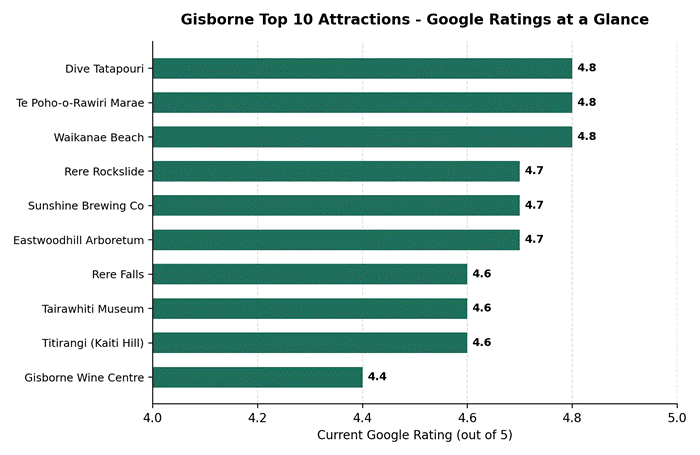
Google Ratings at a Glance
For a quick visual comparison of how each attraction currently rates with visitors, the chart below plots the current Google rating for all ten spots covered in this guide, ordered from highest to lowest.
The Best Time to Visit Gisborne
Gisborne has a mild, sunny climate for most of the year, but conditions do change the experience at several attractions. Late spring through to early autumn brings the warmest water and the most reliable weather for surfing, the rockslide and beach days, and it is the busiest stretch for accommodation. Autumn is the standout season for Eastwoodhill Arboretum, when the deciduous collection turns a full spread of colour, while winter brings quieter roads, cheaper accommodation and consistent surf for those who do not mind a wetsuit.
Whatever time of year you visit, sunrise itself is a year-round drawcard. Exact times shift with the seasons, so it is worth checking sunrise hours the night before and getting to Waikanae or Wainui Beach with a few minutes to spare.
Getting to Gisborne
Gisborne Airport sits close to the town centre and takes regular domestic flights, which makes flying the fastest way in for most visitors. Driving is also popular and generally comes down to two routes: State Highway 2 through Hawke’s Bay and Wairoa, or the longer, more scenic State Highway 35 East Cape route that hugs the coastline past Opotiki. Both drives involve winding roads through hill country, so it pays to build extra time into the journey rather than treating the distance on a map at face value. Once in town, most of the attractions on this list sit within a 45-minute drive of the city centre, which keeps day-tripping simple even without a rigid schedule.
Final Thoughts on Visiting Gisborne
Gisborne rewards visitors who are willing to slow down. It is not a city built around queues and crowds, and that is precisely its appeal: a sunrise you can watch in near silence, a stingray reef tour that still feels wild rather than staged, a natural waterslide that costs nothing but a drive out of town, and a wine and food scene that punches well above its size. Whether you build a single day around the town centre or set aside a full long weekend to include Rere, Eastwoodhill and the wine trail, Gisborne is one of the more genuinely rewarding stops on New Zealand’s East Coast.
If beach towns and honest, local-written travel guides are your thing, our guide to things to do in Anglesea covers a similarly laid-back coastal town on the other side of the Tasman, and it is worth a look if you are planning a wider Australia and New Zealand trip.
Opening hours, prices, ratings and booking requirements mentioned in this guide can change without notice, so it is worth confirming current details directly with each business or attraction before you visit.
This article reflects general travel guidance only and is not a substitute for official safety advice, particularly around natural attractions such as the Rere Rockslide and Rere Falls.
Frequently Asked Questions About Things to Do in Gisborne
What is Gisborne best known for?
Gisborne is best known for being one of the first cities in the world to see the sunrise each day, thanks to its position on New Zealand’s East Coast near the International Date Line. It is also known for its Chardonnay, surf beaches close to the town centre, and its deep Maori and early European history.
How many days do you need in Gisborne?
Two to three days is enough to cover the main sights at a relaxed pace, including a morning at the beach, a stingray reef tour, the Rere Rockslide and Falls, and an afternoon exploring the museum or a winery. A single long day is possible if you focus only on the town centre attractions.
Is Gisborne worth visiting?
Yes. Gisborne is one of the more underrated stops on the North Island’s East Coast. It combines a laid-back beach town feel with genuine cultural depth, uncrowded attractions and some of the best value wine tasting in New Zealand.
What is the best time of year to visit Gisborne?
Late spring through to early autumn tends to offer the warmest, driest conditions for surfing, the rockslide and outdoor exploring. Autumn is particularly popular for Eastwoodhill Arboretum, when the deciduous trees change colour.
Is the Rere Rockslide safe for children?
The rockslide is a natural rock formation rather than a purpose-built attraction, so conditions vary with rainfall and water flow. Many families visit with younger children using boogie boards or inflatable tubes, but it is worth checking recent conditions and supervising closely, since the surface can be slippery and the current stronger than it looks.
Do you need to book the Dive Tatapouri stingray tour in advance?
Yes, booking ahead is strongly recommended, particularly over summer and school holidays, since tours run around low tide times and group sizes are limited.
How do you get to Gisborne?
Gisborne Airport connects the city with regular domestic flights, making it the fastest option for most visitors. Driving in is also common, typically along State Highway 2 through Hawke’s Bay or the scenic State Highway 35 East Cape route, though both are longer, winding drives so it pays to allow extra time.
Is Gisborne good for a family holiday?
Yes. Patrolled beaches, a hands-on museum, gentle walking trails at Eastwoodhill and the novelty of the Rere Rockslide all make Gisborne an easy destination for families, and most of the top attractions sit within a short drive of each other.