New Zealand Lupin Season: Where the Colour Appears and When It Fades
There is a particular stretch of New Zealand’s South Island that turns into a corridor of colour for a few short weeks every year. Roadside verges, river flats and lake edges fill with tall spikes of pink, violet, blue and soft yellow, standing in front of turquoise lakes and snow streaked mountains. These are lupins, and for a narrow window each summer they become one of the most photographed sights in the country. Missing that window by even a couple of weeks can mean the difference between a field full of colour and a paddock of brown stalks, so timing matters more with lupins than with almost any other natural attraction in New Zealand.
This guide sets out exactly where the display happens, when each location peaks, and how to plan a trip around it without wasting a day chasing flowers that have already finished. It also covers the less flattering side of the story, because lupins carry a complicated reputation in New Zealand that most visitors never hear about before they arrive.
What Exactly Are These Flowers
The plant behind the display is the Russell lupin (Lupinus polyphyllus), a tall perennial related to the pea and bean family. A single flower spike can reach well over a metre in height, and a healthy patch produces spikes in a wide mix of colours from the same root stock, which is part of why the fields photograph so well. The plant was developed as a garden variety in the early twentieth century and later spread into the wild across parts of the Northern Hemisphere and the Southern Hemisphere, including New Zealand’s South Island high country.
According to background on the species from Wikipedia, the Russell lupin was bred in England before being introduced to countries such as New Zealand, where it later naturalised outside cultivated gardens. In the Mackenzie Basin specifically, lupin seed is widely believed to have been scattered along roadsides and riverbeds through the twentieth century, partly as an informal effort to add colour to the landscape and partly to help bind loose shingle soil.
Where to See Lupins in New Zealand
Every reliable lupin location in New Zealand sits within a band running from the Mackenzie Basin down through Central Otago and into the Queenstown Lakes district. Here is where the display is strongest, moving roughly from north to south.
Lake Tekapo
Lake Tekapo is the location most visitors picture when they think of New Zealand lupins, and it is usually the first spot in the Mackenzie Basin to come into bloom. The lakefront around the Church of the Good Shepherd is the classic frame, pairing weathered stone walls with a turquoise lake and the Two Thumb Range behind it. Arrive at sunrise if possible, since the church draws heavy coach traffic from mid morning onward once the season is underway.
Address: Pioneer Drive, Lake Tekapo 7999, Mackenzie District, Canterbury
Typical Google rating: around 4.5 out of 5 from several thousand visitor reviews, making it one of the highest rated small landmarks in the Mackenzie District.
Lake Pukaki
A short drive south of Tekapo, Lake Pukaki tends to hold its colour a little later into the season and offers a wider, less crowded shoreline to work with. The lupins here grow along the lake edge and the roadside pull-offs near the visitor centre, with Aoraki Mount Cook filling the skyline on a clear day.
Address: State Highway 8, Lake Pukaki, Mackenzie District, Canterbury
Twizel and the Mackenzie Basin Roadsides
Twizel and the network of roads around it are where the Mackenzie Basin display is at its most extensive, simply because of scale. Rather than one concentrated patch, lupins line long stretches of highway and the walking paths beside the Ohau and Pukaki canals. It is a good base for exploring the wider basin over a full day rather than a single stop.
Lindis Pass and Omarama
Heading south from the basin toward Central Otago, the Lindis Pass carries lupins along its roadside cuttings, often against a backdrop of tussock covered hills that catch the evening light well. Omarama, a little further along, tends to be quieter than Tekapo or Pukaki and rewards travellers willing to pull over rather than photograph from a designated car park.
Wanaka
Wanaka usually peaks a couple of weeks after the Mackenzie Basin, which makes it a useful second stop if you have missed the earlier window further north. The lakefront reserve and the roadsides leading toward the Cardrona Valley both carry good stands most seasons.
Glenorchy and Queenstown
Glenorchy, roughly forty five minutes from Queenstown along the edge of Lake Wakatipu, is typically the last stop on the lupin trail each season. The flowers here often persist into January, close to the Glenorchy wharf and the surrounding paddocks, making it a good fallback if a South Island trip runs later in the summer.
If you are already spending a day in the wider Queenstown Lakes district, it is worth combining lupin viewing with a coffee stop in town before heading out to Glenorchy.
Related reading from OZ Kiwi Life: The Best Cafes in Queenstown, New Zealand, a local’s rundown of where to fuel up before or after the Glenorchy drive.
Lupin Bloom Timeline by Region
Because the season moves gradually from north to south, the same week can mean peak bloom in one location and bare stalks in another. The chart below lays out the approximate window for each region so you can plan a route that follows the colour rather than missing it.
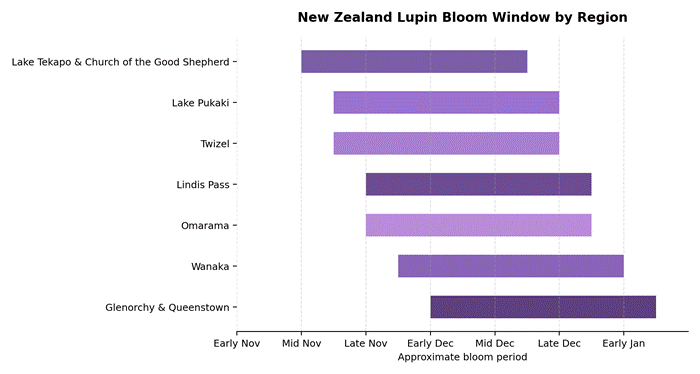
Note: these are typical ranges built from multiple seasons of observed bloom. Actual timing shifts by one to two weeks depending on spring rainfall and temperature, so always check recent local reports before locking in travel dates.
Quick Reference Table: Locations, Regions and Peak Windows
Use this table as a fast planning reference alongside the timeline chart above.
| Location | Region | Peak Bloom Window | Best For |
| Lake Tekapo lakefront | Mackenzie Basin | Mid November to mid December | Church of the Good Shepherd photos |
| Lake Pukaki | Mackenzie Basin | Late November to late December | Turquoise water with Aoraki backdrop |
| Twizel roadsides | Mackenzie Basin | Late November to late December | Riverside walking paths |
| Lindis Pass | Central Otago border | Late November to late December | Roadside colour on a scenic drive |
| Omarama | Mackenzie Basin edge | Late November to late December | Quieter, fewer crowds |
| Wanaka lakefront | Central Otago | Early December to early January | Lake and mountain combinations |
| Glenorchy | Queenstown Lakes | Early December to mid January | Lake Wakatipu and the pier |
The History Behind New Zealand’s Lupin Trail
The story locals tell about the Mackenzie Basin lupins usually centres on informal seed scattering along roadsides and riverbeds through the mid twentieth century, done partly to brighten an otherwise dry, tussock coloured landscape and partly to help hold loose shingle banks together. Whatever the exact origin in each valley, the plant found the dry, free draining soils of the high country to its liking and spread well beyond any original planting.
That success is also the problem. Regional authorities in the Mackenzie Basin classify lupins as a pest plant because dense stands along braided riverbeds can choke channels used by native birds such as the wrybill and black stilt, both of which nest on open shingle that lupins gradually cover over. Several catchment groups run seasonal clearance programmes to keep river braids open, which is why the exact footprint of the display can shift slightly from one year to the next.
Tips for Photographing Lupins Without Ruining the Moment
- Arrive within the first hour after sunrise, since the light is softer and the crowds at popular spots like Tekapo are far thinner.
- Stay on formed tracks and existing clearings rather than walking into the middle of a patch, both for your own photos and to avoid trampling seedlings for the following year.
- Bring a longer lens for compressed shots that stack colour against a mountain backdrop, rather than relying only on a wide angle.
- Check recent local social media posts a few days before travelling, since bloom can advance or fade faster than expected in a hot, dry spell.
- Plan for wind. The Mackenzie Basin is frequently breezy in the afternoon, so early morning or early evening sessions usually give calmer flower spikes for sharp photos.
Planning a South Island Trip Around Lupin Season
A realistic route for most visitors starts in Christchurch or Queenstown and threads through the Mackenzie Basin over two to four days, timed for late November through mid December when the Tekapo and Pukaki displays are usually strongest. Travellers arriving later in the season, from mid December onward, generally have better luck shifting their focus toward Wanaka and Glenorchy instead.
If sunrise photography is part of the plan, it helps to know exact daylight hours for the dates you are travelling, since the Mackenzie Basin sits close to the middle of the country and sunrise times shift noticeably between November and January.
Related reading from OZ Kiwi Life: What Time Does the Sun Rise and Set on a New Zealand Holiday, useful for working out exactly when first light will hit the Tekapo lakefront on the dates you are travelling.
For travellers extending a trip beyond the South Island, it is also worth reading up on regions further afield. Related reading from OZ Kiwi Life: Top 10 Things to Do in Gisborne, a guide to New Zealand’s easternmost city for anyone combining a South Island lupin trip with North Island time.
Weather and Timing Considerations
Spring rainfall levels have a direct effect on how tall and dense the lupins grow each year, and a dry October can push the whole season earlier by a week or more. For up to date conditions before a trip, the MetService forecast for the Mackenzie District is a reliable starting point, and it is worth checking again a few days before departure since high country weather can change quickly.
Common Mistakes Visitors Make When Chasing the Bloom
A surprising number of trips miss the lupin display entirely, and it is rarely because the flowers were not there at all. It is usually a scheduling or expectation problem that a bit of planning would have fixed.
- Booking a South Island trip for January and expecting Tekapo to still be in full colour. By the new year, the Mackenzie Basin display has generally faded, even though Wanaka and Glenorchy may still be going.
- Driving straight past roadside patches to reach the famous car park at the Church of the Good Shepherd. Some of the best, least crowded stands sit along quieter stretches of highway a short drive out of town.
- Assuming every patch of purple flower seen from the car is a lupin. Several other roadside wildflowers bloom around the same time and share a similar colour palette, so it pays to stop and look closely before setting up a shot.
- Travelling without a backup location. Because bloom timing shifts with the weather, having a second or third option along the route protects the day if the first stop has already peaked or not yet opened.
- Ignoring parking restrictions along State Highway 8. Rangers and local police do enforce clearways during peak season, and a parked car on the wrong verge can hold up traffic on a road with no real shoulder.
Quieter Alternatives to the Busiest Spots
Tekapo and Pukaki draw the largest crowds simply because they appear in the most photographs, but several quieter stretches offer comparable colour with a fraction of the visitors.
The road between Twizel and the Ohau canals carries long, uninterrupted roadside stands that rarely see a tour bus. Further south, the Ahuriri River valley near Omarama offers a similar mountain and river combination to Pukaki, with a fraction of the foot traffic. For travellers based around Queenstown, the back roads leading toward Glenorchy tend to hold better stands than the town centre itself, particularly along the flats bordering the Rees and Dart rivers.
None of these alternatives require a detour of more than half an hour from the main routes already listed above, which makes them easy to slot into a Mackenzie Basin or Queenstown Lakes itinerary without adding an extra overnight stop.
Final Thoughts
Lupins occupy an odd place in New Zealand’s identity: not native, not universally welcomed by conservationists, yet genuinely one of the most photogenic sights the South Island produces each summer. Getting the timing right matters more than almost any other factor, so treat the Mackenzie Basin as your starting point in late November, and keep Wanaka and Glenorchy in reserve if your travel dates land later in the season. Check recent conditions before you set off, stay on formed paths once you arrive, and you will come away with the kind of photographs that first drew you to look this trip up in the first place.
Frequently Asked Questions
When is the best time to see lupins in New Zealand
The most reliable window sits between late November and mid December, when the Mackenzie Basin is usually at peak colour. Locations further south and east, such as Wanaka and Glenorchy, tend to peak a few weeks later, into early January.
Are lupins native to New Zealand
No. Lupins are an introduced species, originally brought in during the twentieth century partly to help stabilise loose high country soil and roadside banks. They have since naturalised widely across the South Island and are officially classed as a pest plant in several regions because of how they spread along waterways.
Is it legal to pick lupins in New Zealand
Picking is discouraged almost everywhere lupins grow, particularly along riverbeds managed by regional councils, because disturbing the plants helps scatter seed and spreads them further into braided river systems. Photograph them where they stand and stay on formed paths instead.
Where is the single best spot for lupin photos
Most photographers still point to the Lake Tekapo lakefront near the Church of the Good Shepherd, since it pairs lupins with turquoise water and the Two Thumb Range in one frame. Lake Pukaki is a strong alternative when Tekapo is crowded.
Do lupins grow anywhere in the North Island
Sightings happen occasionally along some North Island roadsides and riverbanks, but the reliable, large-scale displays that draw visitors are a South Island phenomenon, concentrated in the Mackenzie Basin, Central Otago, and the Queenstown Lakes district.
How long does the lupin bloom actually last in one location
An individual patch usually holds good colour for two to four weeks before the flower spikes fade and turn brown. Because the bloom starts earlier in the Mackenzie Basin and later further south, the overall lupin season across the country stretches close to two months.
Related Posts from OZ Kiwi Life